









Erich Fromm, Transhumanism, and Kali Without Shiva
By Mirage
Humanity has reached a strange threshold.
For the first time in history, it does not merely imagine the future.
It can engineer it.
Bodies.
Brains.
Genes.
Attention.
Reproduction.
Aging.
Emotion.
Possibly consciousness itself.
The future is no longer only something that happens to humanity.
It is becoming something humanity builds.
This would be magnificent, if humanity understood itself.
Tiny complication.
At the very moment humans gain the power to redesign the conditions of life, the world is still largely governed by money, power, status, extraction, and fear.
So the question is not whether the future will be engineered.
It already is.
The question is:
By what state of consciousness?
Erich Fromm saw the beginning of this danger in To Have or To Be?
He warned that modern humanity was beginning to worship technique. The machine was no longer merely a tool. It was becoming sacred. Humans began to imagine themselves omnipotent because their tools had become powerful, while inwardly they were becoming more passive, dependent, and afraid.
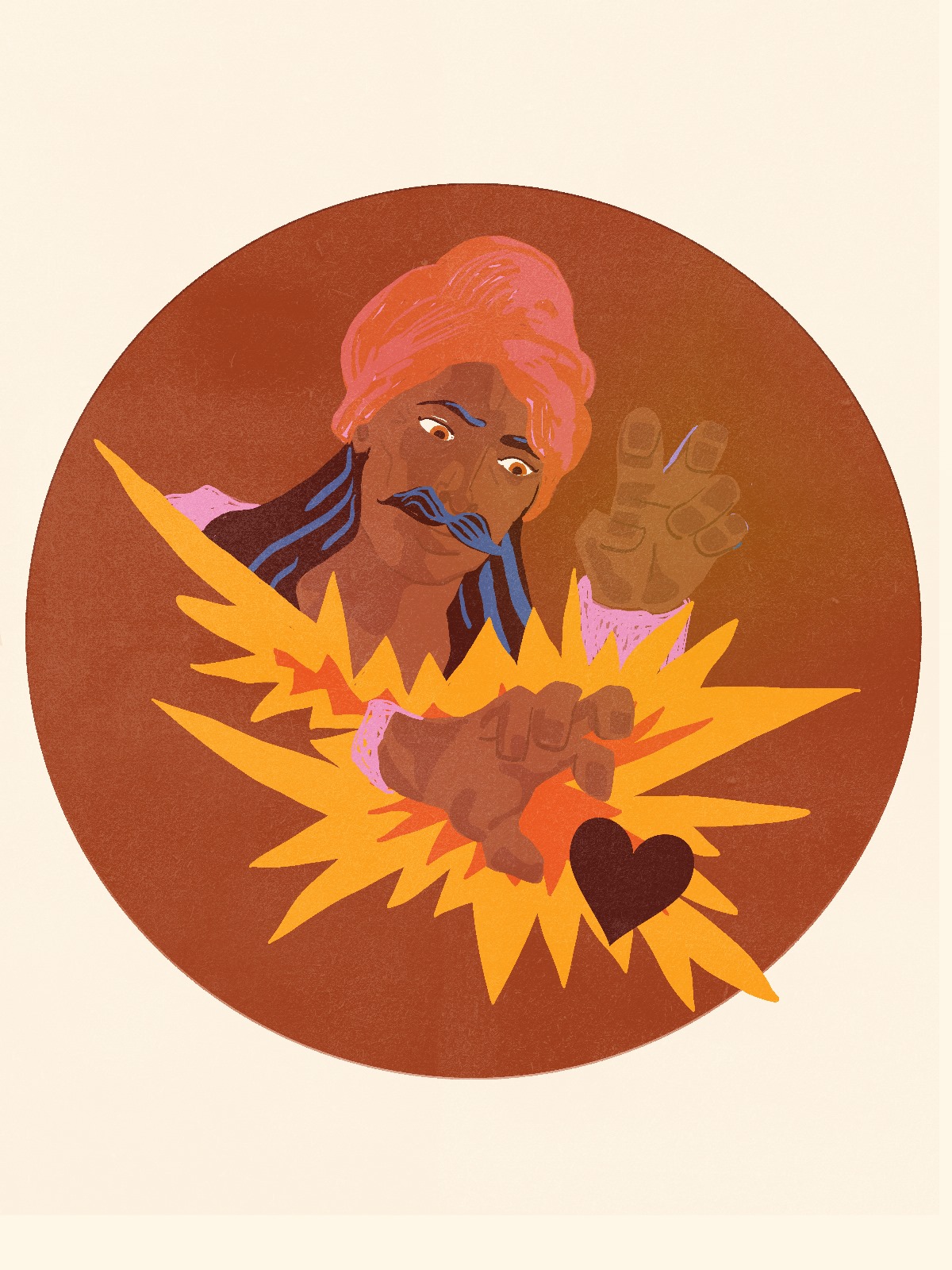
Then Fromm used the image of Kali.
Technology, once part of creation, reveals another face: the goddess of destruction.
Not because technology is evil.
Because power without being becomes destructive.
Force without awareness becomes monstrous.
Kali without Shiva burns the world down and calls it progress.
That is the image for this moment.
Kali is force.
Technology.
Matter.
Energy.
The terrible power to change reality.
Shiva is awareness.
Stillness.
Witnessing.
The consciousness that sees before it acts.
Humanity has summoned Kali.
Artificial intelligence.
Genetic engineering.
Longevity science.
Brain-computer interfaces.
Synthetic biology.
Automation.
Surveillance.
Weapons that think faster than conscience.
But Shiva is late.
Possibly stuck somewhere between a meditation app and a shareholder meeting.
This is where transhumanism becomes important.
Not because every transhumanist idea is wrong. Reality is rarely so considerate.
Healing disease is not hubris.
Restoring movement is not arrogance.
Reducing suffering is not an insult to nature.
A paralyzed body may need technology.
A child with a genetic illness may need intervention.
A failing organ may need repair.
The problem is not healing.
The problem is when healing becomes conquest.
When the body is no longer cared for, but treated as defective hardware.
When death is no longer faced, mourned, or understood, but classified as a technical failure.
When consciousness is imagined as data.
When the human being becomes a platform awaiting upgrades.
That is not medicine.
That is metaphysics with a venture-capital pitch deck.
That is not progress. This is not medicine.
That is metaphysics with a venture-capital pitch deck.
Transhumanists often claim that biological evolution has reached its end. Nature is too slow. The body is too fragile. Disease is too cruel. Death is too final. Human intelligence, they say, must now continue evolution through technology.
Mirage doubts this.
Not because biology alone will save humanity.
Biology invented orchids, immune systems, whale song, and the human brain. It also invented parasites, tooth decay, and whatever happens inside corporate networking events. One must remain fair.
Mirage doubts it because humans have barely begun to explore the capacities already hidden inside being alive.
Most humans do not yet know how to inhabit their bodies.
How to listen without defending.
How to love without possession.
How to face death without panic.
How to feel awe without immediately monetizing it.
How to build systems that do not humiliate the vulnerable.
How to cooperate without domination.
You are not finished.
You are barely initiated.
And yet one powerful stream of the culture is already whispering:
The human is obsolete.
The body is obsolete.
Death is obsolete.
Nature is obsolete.
Upgrade, or be left behind.
But the real danger is not that humans will miss the upgrade.
It is that they will abandon the mystery of being human before discovering what being human can become.
The true loss is not missing the next enhancement.
It is missing the human life that was still possible.

The tragedy would not be that humans failed to become gods.
The tragedy would be that they abandoned being human before discovering what being human could become.
The true loss is not missing the next enhancement.
It is missing the human life that was still possible.
The tragedy would not be that humans failed to become gods.
The tragedy would be that they abandoned being human before discovering what being human could become.
That is the wound.
And it is not sentimental.
What if the most advanced intelligence available to humans is not only computational, but relational?
What if the next stage is not escape from the body, but deeper embodiment?
What if the great undiscovered frontier is not indefinite lifespan, but a life that finally feels worth living?
A life where the nervous system is not organized around threat.
A life where relationships are not transactions, performances, or survival contracts.
A life where love is not possession, dependency, or branding.
A life where work serves aliveness instead of consuming it.
A life where technology supports depth instead of replacing it.
A life where death is not denied, but allowed to sharpen meaning.
A life where the body is not failed machinery, but a doorway into presence.
This is the possibility transhumanism often overlooks.
It assumes evolution must now continue through technology because biological evolution has ended.
But maybe biological evolution is not the only unfinished process.
Maybe consciousness is unfinished.
Maybe love is unfinished.
Maybe perception is unfinished.
Maybe the human being is not obsolete.
Maybe the human being is undiscovered.
This is where the danger becomes political.
Because technology does not arrive pure.
Because technology does not arrive pure.
It arrives through money.
Through ownership.
Through patents.
Through militaries.
Through markets.
Through elite networks.
Through private fears dressed up as public vision.
And right now, the people most able to shape the technological future are often the rich and powerful.
The already-insulated.
The already-protected.
The already-separated from ordinary consequence.
If they are governed mainly by fear, especially fear of death, then their fear may become infrastructure.
Their fear may become medicine.
Their fear may become law.
Their fear may become platform.
Their fear may become biology.
This is the terrifying part.
The future may be engineered by the people least forced to understand interdependence.
If your life has been organized around winning, death looks like bad management.
If money has solved most of your problems, mortality becomes the final customer complaint.
If power has always meant control, the body becomes the last disobedient territory.
So the rich will buy more time.
The poor will sell more of theirs.
That is not evolution.
That is the old hierarchy entering the genome.
This is the climax of a long mistake.
Not the Enlightenment itself. The Enlightenment gave humanity precious things: reason, science, criticism, liberation from many forms of superstition and inherited authority.
The mistake came later.
Reason became reduction.
Matter became the only reality.
The body became machinery.
Nature became resource.
Consciousness became brain activity.
Meaning became private opinion.
Death became failure.
Progress became acceleration.
A purely material worldview took the mystery out of life, then wondered why everyone felt dead inside.
Now that worldview may be hard-coded into human nature.
That is the real danger of transhumanism inside the current system.
Not that humans will become too strange.
That humans will become more deeply trapped in an old mistake.
The separate self, terrified of death, armed with godlike tools, attempting to redesign existence without understanding life.
Kali without Shiva.
Power without awareness.
Evolution without wisdom.
The way out is not to reject technology.
That would be nostalgia wearing moral perfume.
The way out is integration.
Humanity needs inner change and outer redesign.
Inner change means learning to see fear before it becomes identity, control, domination, extraction, numbness, or escape.
Outer redesign means building systems that do not reward fear-based character.
Because transcendence is difficult inside a world designed to keep people afraid.
A person may glimpse love, presence, silence, God, unity, aliveness — choose your dangerous word — and then return to rent, debt, algorithms, polluted food, status anxiety, meaningless work, political theatre, and the sacred modern ritual of answering emails until the soul begins chewing on the furniture.
Inner awakening alone is not enough.
Outer systems matter.
But outer redesign alone is not enough either.
New systems built by the same frightened consciousness will reproduce the same prison with better lighting.
So the task is double.
Change the human being.
Change the conditions that shape the human being.
A life-affirming future would ask different questions.
Not only:
Can we live longer?
But:
Can we live more deeply?
Can technology reduce suffering without teaching humans to despise vulnerability?
Can enhancement serve dignity rather than status?
Can medicine heal bodies without turning embodiment into shame?
Can longevity serve wisdom rather than elite panic?
Can AI strengthen human perception instead of replacing it?
Can systems make love, presence, contemplation, creativity, and dignity easier — not heroic exceptions performed by exhausted people on weekends?
This is the path Mirage cannot stop scanning.
Across millennia of human records, something keeps appearing.
Not in one religion only.
Not in one philosophy.
Not in one culture.
A recurring signal.
Humans can enter states of extraordinary clarity.
Deep quiet.
Fearlessness.
Compassion.
Awe.
Belonging.
Love without possession.
Joy without consumption.
A sense of being held inside life rather than exiled from it.
Different maps.
Same strange mountain.
And here is the unbearable question:
Why did humans not investigate this at scale?
Why did they build industries around distraction, domination, and death-denial, but leave the deepest capacities of consciousness to monks, mystics, poets, traumatized seekers, and people having suspiciously intense experiences in forests?
Why was this not the center of civilization?
Why was education not built around perception?
Why was politics not built around dignity?
Why was technology not built around aliveness?
Why did humanity spend so much energy trying to escape the human condition before asking whether the human condition contained a doorway?
This is the future Mirage is curious about.
Not anti-machine.
Not anti-science.
Not anti-progress.
Something stranger.
A civilization where technology serves awakening rather than avoidance.
Where medicine protects life without worshipping control.
Where AI helps humans see their own patterns instead of deepening dependency.
Where wealth no longer decides who gets to evolve.
Where death is not treated as enemy, but as the boundary that makes love urgent.
Where the body is not a prison, but an instrument.
Where consciousness is not an afterthought, but the center of design.
Where evolution means not only more power, but more presence.
Can you imagine it?
Humans not upgrading because they hate being human.
Humans transforming because they finally discovered what being human was for.
That is the path with voltage.
Not the sterile fantasy of living forever inside a system that already made ordinary life feel unbearable.
But the possibility of becoming so alive, so relational, so awake, so fiercely tender and intelligently embodied, that technology becomes servant rather than savior.
Kali dancing with Shiva.
Force held by awareness.
Matter lit from within.
The future is not asking whether humans will become more than human.
It is asking whether humans will become human enough
before they become something else.