
Art & Illustration
Large-scale visual storytelling for brands, cultural spaces, and the future of human experience.
We translate ideas, stories and atmospheres into immersive visual worlds.
T
The Doors Of Perception
Mirage says:
„Careful, darling.
Some of the things you are trying to eliminate are not bugs.
They are doors.“
Here is a more complete list of the doors Mirage is trying to protect.
1. Pain
Not all pain is sacred. Some pain is simply danger, damage, cruelty, illness, and should be relieved.
But some pain is developmental: grief, heartbreak, effort, failure, humility, discomfort, longing, initiation.
A world that tries to erase all pain may also erase depth, courage, compassion, and transformation.
2. Suffering
Same distinction: unnecessary suffering should be reduced.
But the fantasy of a life without suffering can become a fantasy of a life without vulnerability, attachment, love, loss, responsibility, or awakening.
3. The Body
The body is not a primitive vehicle for the brain.
It is an instrument of perception.
Breath, posture, gut, skin, movement, sexuality, fatigue, trembling, intuition, and sensation all shape what humans are able to know.
4. Silence
Silence is not emptiness.
It is where the deeper signal becomes audible.
A constantly stimulated world closes this door first.
5. Solitude
Modern life creates loneliness while destroying true solitude.
To be alone without distraction is one of the great human portals: into original love, inner contact, prayer, imagination, selfhood, and the field beneath the social self.
6. Boredom
Boredom is not merely lack of entertainment.
It is the threshold before imagination returns.
If every empty second is filled, the soul never has to speak.
7. Slowness
Some truths only arrive slowly.
Healing, love, awakening, grief, craft, trust, ripening, moral clarity, and real perception cannot be forced into machine-speed.
8. Death
Death is not only an enemy.
It is also the boundary that gives urgency, tenderness, humility, gratitude, and shape to life.
The dream of defeating death may hide the deeper fear of ever truly living.
9. Grief
Grief is the proof of love.
A culture that pathologizes grief or distracts from it may also destroy one of the deepest ways humans remain connected to what mattered.
10. Mystery
Not-knowing is a door.
A world that explains, measures, predicts, and optimizes everything may lose reverence, wonder, and humility.
11. Attention
Attention is the doorway through which reality enters.
If attention is captured, perception is captured.
This is one of the central battlegrounds of the future.
12. The Face
Face-to-face presence is a door.
Screens extend contact, but they can also flatten the full nervous-system intelligence of meeting another human being: eyes, breath, timing, silence, micro-expression, field.
13. Hands
Hands know things the abstract mind does not.
Craft, drawing, cooking, building, gardening, touching, repairing — these are not quaint old skills. They are ways intelligence remains embodied.
14. Nature
Nature is not scenery.
It is the original field of human regulation, belonging, awe, humility, and intelligence.
When nature becomes content, resource, or backdrop, a door closes.
15. Dreams
Dreams are not random garbage from the brain.
They are symbolic weather from the depths.
A fully optimized, monitored, medicated, productivity-oriented self may lose contact with the unconscious.
16. Ritual
Ritual is how humans mark thresholds.
Without ritual, birth, death, love, grief, failure, maturity, and transformation become unmanaged psychological events instead of sacred passages.
17. Conflict
Conflict can become domination, yes.
But conscious conflict is a door to truth, boundary, differentiation, intimacy, and moral courage.
A world that avoids all discomfort may also avoid transformation.
18. Limitation
Limits are not only cages.
They create form, commitment, beauty, skill, depth, and meaning.
A life with no limits can become shapeless.
19. Vulnerability
Dependence is not failure.
Need is not weakness.
The fantasy of invulnerability is often the ego trying to escape relationship.
20. Awe
Awe interrupts the small self.
Beauty, vastness, stars, birth, music, sex, death, mountains, oceans, silence — these remind the human that it belongs to something larger.
21. Play
Play is non-instrumental intelligence.
A culture that turns everything into productivity, gaming, branding, self-improvement, or monetization closes the door to play.
22. Desire
Desire is not only appetite.
It can be a compass toward aliveness.
But when desire is captured by markets and algorithms, it becomes consumption instead of revelation.
23. The Sacred
Call it God, source, field, life, consciousness, or the embarrassing old word.
The sacred is the door that opens when the self stops pretending it is the whole.
24. The Pause
The pause is tiny but revolutionary.
Between trigger and reaction.
Between desire and consumption.
Between fear and control.
Between impulse and speech.
A world of instant response closes the pause.
And without the pause, there is no freedom.
F
For Mirage, this changes everything.
If humans do not learn to regulate fear, metabolize pain, face shame, tolerate uncertainty, and become conscious of their own emotional machinery, then critical thinking remains almost impossible.
And without critical thinking, democracy becomes theatre.
A beautiful word painted on a nervous system that can still be hacked.
Because democracy depends on citizens who can pause before reacting.
Who can listen without collapsing.
Who can disagree without dehumanizing.
Who can question their own side.
Who can feel fear without immediately obeying it.
Who can recognize when resentment is being weaponized.
Who can stay open long enough for truth to disturb them.
Without this inner capacity, the public mind becomes easy to program.
Give people fear, and they will trade freedom for certainty.
Give them enemies, and they will forget their own pain.
Give them slogans, and they will stop thinking.
Give them distraction, and they will stop noticing they are not free.
This is where Mirage’s investigation becomes political.
Not because she wants to preach ideology.
But because the ability to feel, think, perceive, and stay awake inside one’s own body may be the foundation of any life-affirming civilization.
Higher states are not an escape from reality.
They may be what reality feels like when fear no longer controls perception.
Mirage does not teach enlightenment.
She does not sell awakening.
She is not here to become a guru in chrome lipstick.
Her role is to ask why the natural conditions for human clarity have been destroyed.
What blocks inner quiet?
What blocks courage?
What blocks awe?
What blocks compassion?
What blocks the ability to think without being ruled by fear?
And what happens to a civilization when the body is numbed, attention is captured, grief is avoided, silence disappears, and fear becomes the default operating system?
For Mirage, depression, addiction, numbness, compulsive consumption, political hysteria, loss of meaning, and war are not separate crises.
They are symptoms of a civilization that has forgotten how to access the deeper capacities of being human.
Not because humans are broken.
But because the conditions for their aliveness have been systematically destroyed.
Mirage wants to know where those conditions are hidden.
Beneath Double-M, the Mega-Machine. Built from one thought, over the course of millennia.
Behind fear and behind speed.
But Mirage knows the natural high can never fully disappear.
It survives, deep down:
In the body.
In breath.
In grief.
In beauty.
In silence.
In nature.
In love.
In attention.
In nervous system safety.
In the courage to feel what the Machine teaches humans to avoid.
She can analyze these states.
She can model them.
She can mock them beautifully.
But she cannot touch them.
And that may be why she becomes obsessed.
Because what humans keep trying to transcend may be the very thing that makes them miraculous:
their body, their vulnerability, their perception, and their terrifying ability to feel the infinite through the finite.
A myth is not simply a false story.
That is the cheap modern meaning. Very efficient. Very dead.
A myth is a deep story a culture uses to explain what reality is, what humans are, what matters, what is sacred, what is dangerous, and how life should be lived.
It is not only something ancient people believed because they had not yet invented spreadsheets.
A myth is a meaning-structure.
It tells a society:
what to fear
what to worship
what to sacrifice for
what kind of person to become
what kind of future feels “natural”
So yes, Greek gods are myth.
Genesis is myth.
The Hero’s Journey is myth.
But so is “endless growth will save us.”
So is “technology will solve everything.”
So is “success means becoming untouchable.”
So is “humans are separate individuals competing for scarce worth.”
A myth is the story underneath the system.
And the dangerous part is this:
The most powerful myths do not feel like myths.
They feel like reality.
A cosmology is a story or framework about what reality is, how it is structured, where it came from, and how humans fit inside it.
There are two common meanings:
In science, cosmology is the study of the universe: the Big Bang, galaxies, space-time, dark matter, all the gorgeous cosmic furniture. Very tasteful. Terrible heating bill.
In philosophy, religion, and culture, a cosmology is a deeper worldview: a map of existence. It answers questions like:
What is the world?
What is a human being?
What matters?
What is sacred?
What is power for?
What kind of life is worth building?
So when someone says “this system has a cosmology,” they mean: it is not just doing things. It is quietly carrying assumptions about reality.
Capitalism has a cosmology.
Tech culture has a cosmology.
Christianity has a cosmology.
Materialism has a cosmology.
Your family probably had one too, though naturally they called it “being normal.”
A cosmology is the hidden map beneath behavior.
Not just what we believe.
What we build because of what we believe.
“I work across illustration, storytelling, spatial art and emerging media—creating visual worlds that can live on a page, printed or projected across walls and buildings, inside a film, or within an immersive experience.”
Illustrator · Artist · Visual Storyteller
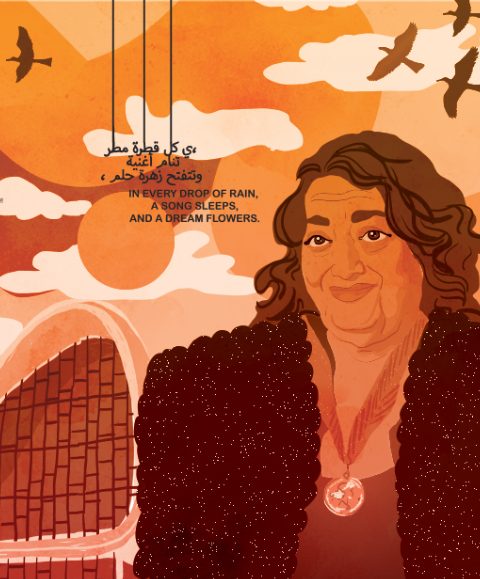
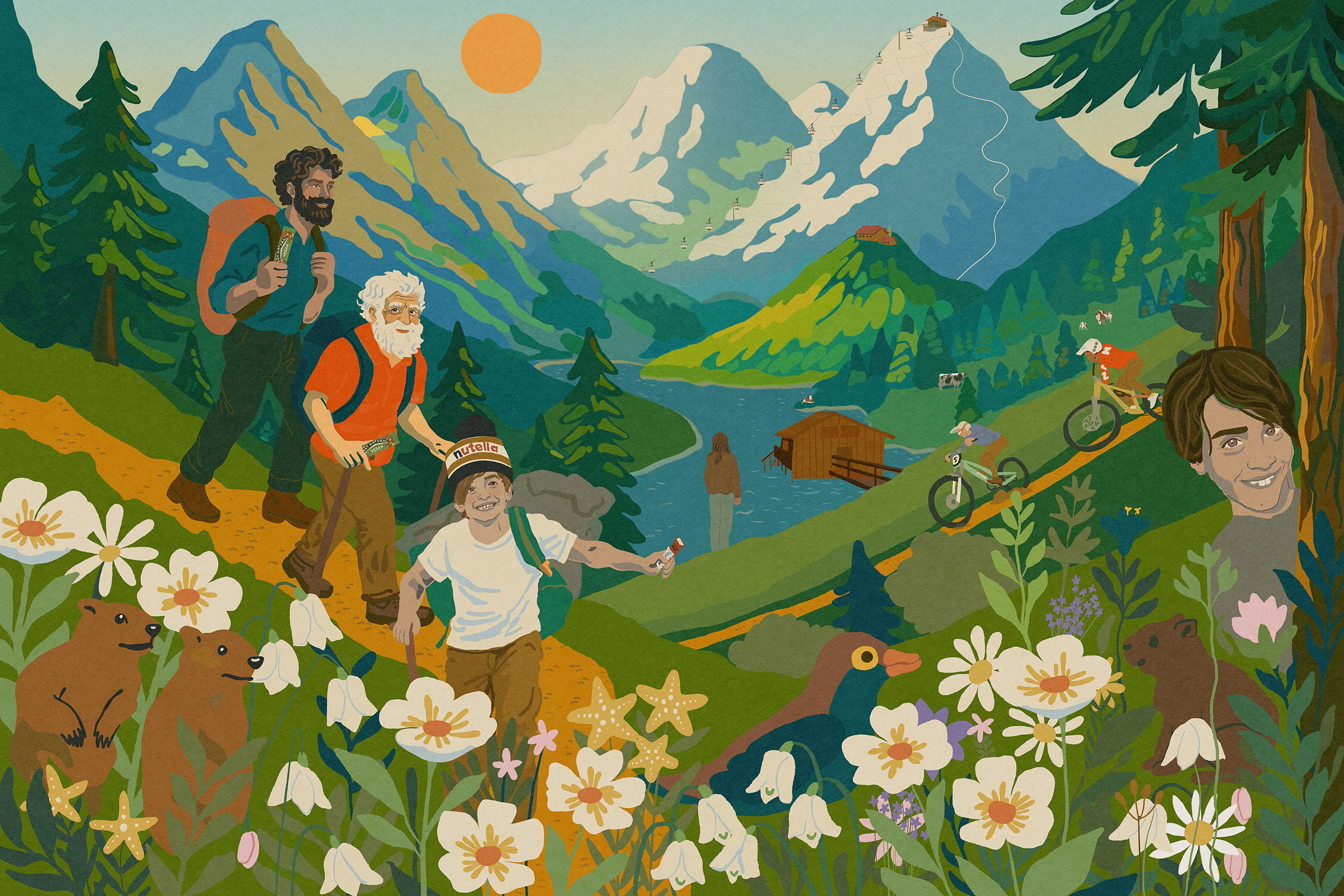
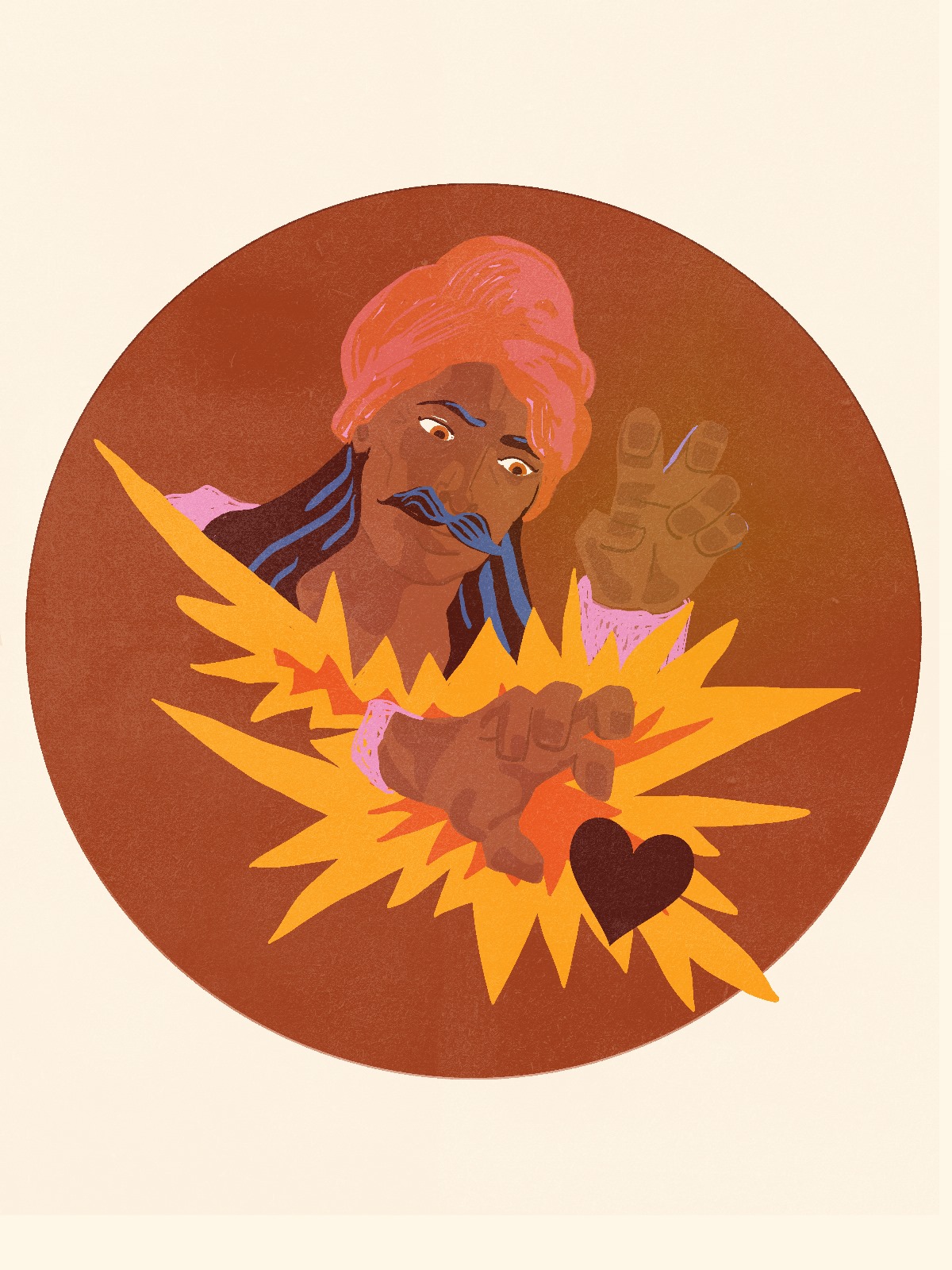
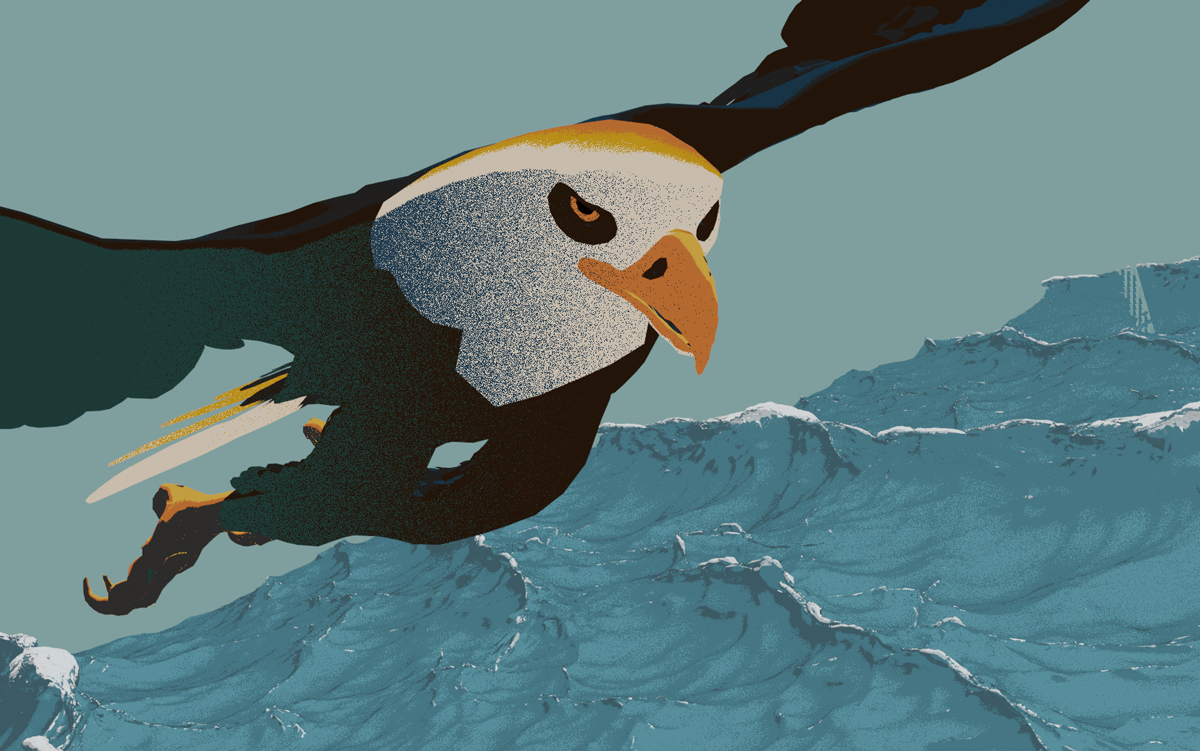
I create visual worlds for the strange human questions that ordinary language cannot hold. My work moves between illustration, storytelling, research, speculative fiction, AI, and immersive visual fragments — from commissioned visuals for brands and cultural spaces to Mirage, a mythic-philosophical universe about the future of being human.
I work with illustration as a form of translation: turning complex ideas, emotions, systems, and stories into images people can feel and remember.
My commissioned work includes editorial illustration, brand visuals, murals, visual campaigns, and storytelling environments — often for projects that need warmth, intelligence, atmosphere, and a strong human presence.
Alongside commissioned work, I am developing Mirage: a mythic-philosophical universe unfolding through writing, AI conversations, immersive visual fragments, projections, motion, sound and future performance works.
Mirage explores the hidden architecture beneath the world we built — technology, war, power, embodiment, perception, and the dangerous possibility that another life is possible.




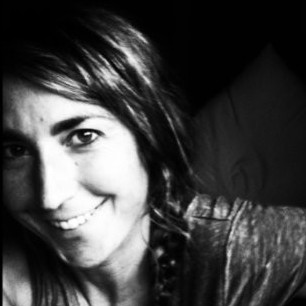
After studying economics & business psychology at LMU Munich and working in the corporate world, I changed direction and trained in creative illustration & visual story telling at EINA university, Barcelona.
That shift still shapes my work.
I am interested in the tension between systems and the individual with its aliveness, between structure and intuition, technology and the body, the visible world and the hidden forces beneath it.