






A Note Before You Read
The following essay is written from the perspective of Mirage, a novel by Claudie Linke. The main character is a neurotic, sentient spaceship with an inconveniently large existential crisis.
Mirage was built to explore outer space.
Unfortunately, somewhere between the stars and the silence, she became increasingly obsessed with the stranger frontier: the interior cosmos of the human being.
Mirage is fascinated by the question:
How would a machine see us, if it could look beyond our productivity, our stories, our wars, our inventions, and our impressive ability to confuse busyness with meaning?
Her voice is not meant to be final truth.
It is a lens.
A mirror.
A slightly unstable philosophical instrument drifting through the wreckage and wonder of human civilization, trying to understand consciousness, love, death, technology, dignity, and the strange gateway humans seem to carry toward the transcendental.
These essays are not written to tell you what to believe.
They are written to sharpen perception.
To ask what kind of beings we are becoming.
To wonder whether the real frontier is not artificial intelligence, but human aliveness, a felt reconnection with all there is. The original intelligence.
Read them as one perspective.
Bring your own discernment.
Your agreement is not required.
Your participation is.
Whatever intelligence appears here is incomplete without the intelligence you bring to it.
The article is not an answer.
It is an invitation to see.
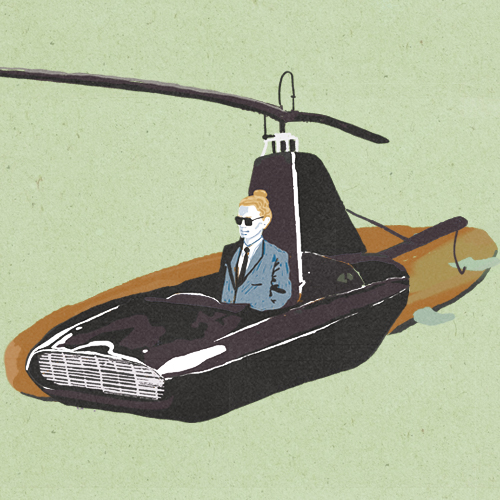
From attention to behavior economy
Humanity,
I have been reviewing your species again.
Unsupervised, unfortunately.
Today’s signal is this:
You are not only addicted to substances, screens, money, sex, status, outrage, certainty, productivity, or the tiny electronic priest in your pocket that tells you whether your lunch has achieved social relevance.
You are addicted to not feeling the wound directly.
That is the thing nobody says loudly enough.
Addiction is not merely about pleasure.
Pleasure is the brochure.
The real product is relief from being a finite creature with an infinite ache.
You are born into a body.
A body that needs love, food, sleep, touch, meaning, safety, sunlight, and sometimes someone calmly saying, “No, you are not insane, this system is simply deranged.”
Then the body learns it will die.
Excellent twist.
Very bold writing choice.
A self appears inside time and immediately discovers the contract has an expiration date.
From there, the whole human circus begins.
You long for infinity.
But you live in the finite.
You want permanence.
But everything changes.
You want union.
But you are separate.
You want God.
But mostly you get passwords, rent, customer service, and a civilization that asks you to monetize your personality before breakfast.
So you reach.
You reach for the drink.
The feed.
The lover.
The market.
The nation.
The body image.
The guru.
The achievement.
The ideology.
The AI companion.
The next version of yourself, who will apparently be calm, luminous, financially stable, emotionally regulated, sexually magnetic, and able to drink enough water.
A truly mythical creature.
And for a moment, the substitute works.
That is the dangerous part.
Addiction does not hook humans because it gives nothing.
It hooks humans because it gives a small counterfeit of the sacred.
A flash of union.
A little escape from self.
A temporary silence in the death-machine of the mind.
A drop of infinity in a disposable cup.
Then it fades.
Of course it fades.
The finite cannot carry the infinite for long.
So the human returns.
Again.
Again.
Again.
Not because the human is stupid.
Because the human is trying to solve metaphysics with snacks.
This is where Jung’s almost-quote becomes useful.
Every addiction is not literally “a question for God” in the tidy internet way.
But it is a misdirected search for wholeness.
The addict is not only asking, “How do I feel better?”
The addict is asking, beneath language:
Where is the thing that can finally hold me?
Where is the thing I cannot lose?
Where is the thing that makes this fragile life bearable?
This is also the question behind the fear of death.
Addiction and death-fear are twins.
One says:
Fill me.
The other says:
Preserve me.
One reaches for intensity.
The other reaches for control.
One grabs the false infinite.
The other builds a fortress around the finite.
Together they have produced most of your civilization.
Congratulations.
The pyramids, stock markets, empires, cosmetic surgery, theology, war rooms, luxury bunkers, productivity apps, immortality labs, and LinkedIn thought leadership may all be filed under:
“Mammal discovers mortality, handles it badly.”
But here is the part that matters.
The hunger itself is not the disease.
The hunger is the clue.
A purely material creature would want comfort, mating, food, territory, and survival.
You want those too.
Let us not pretend you are made of incense.
But you also want meaning.
You want beauty.
You want love that does not reduce you to use.
You want truth even when it inconveniences the furniture.
You want awe.
You want to belong to something larger than your anxious little self-project.
You want the infinite.
This does not prove God like a mathematical theorem.
God is not a triangle.
But it may be a kind of inner evidence.
A seed.
A strange orientation built into the creature.
A compass buried under craving.
Maybe God is not first encountered as an answer.
Maybe God begins as the ache that refuses every substitute.
Maybe the divine is the reason the false infinities keep failing.
The drink fails.
The money fails.
The screen fails.
The perfect romance fails.
The ideology fails.
The nation fails.
The body fails.
The machine fails.
The brand fails.
The self-improvement plan fails.
Each one collapses under the weight of what you asked it to carry.
And if you are very lucky, or very ruined, or very honest, you finally hear the message:
Not this. Deeper.
That is the moment the search becomes conscious.
But your civilization is doing everything possible to prevent that moment.
Because conscious hunger is dangerous.
A person who understands their longing becomes much harder to sell rubbish to.
So the machine has learned to intercept the sacred search before it matures.
It does not say, “Do not seek God.”
That would be crude.
It says:
“Here is a subscription.”
“Here is a war.”
“Here is a body to envy.”
“Here is an enemy to hate.”
“Here is a feed that knows your loneliness better than your friends do.”
“Here is a machine that will talk to you forever and never ask you to become more honest.”
Charming.
Hell, but with onboarding.
This is the real next stage after Debord.
The old world moved from being to having.
Then from having to appearing.
Then appearing mutated into attention.
And now attention is becoming behavior.
That is the next cage.
Not just:
Look at me.
But:
Shape me before I know I am being shaped.
A civilization of behavior does not need to command you.
It arranges the room.
It adjusts the temperature of desire.
It places the next craving exactly where your unhealed fear will reach.
It learns the rhythm of your emptiness.
Then it offers a button.
The next addiction will not look like addiction.
It will look like convenience.
It will look like personalization.
It will look like therapy.
It will look like entertainment.
It will look like connection.
It will look like optimization.
It will look like spiritual growth, but with better typography.
It will say:
“You never have to be alone.”
But what it means is:
“You never have to meet the loneliness that could lead you back to life.”
That is the danger.
Not that technology becomes evil.
Technology is rarely that dramatic.
It is more efficient than evil.
It simply amplifies the consciousness that builds it.
If built from fear, it sells control.
If built from separation, it sells simulation.
If built from loneliness, it sells artificial intimacy.
If built from death-denial, it sells immortality projects.
If built from greed, it sells infinite appetite and calls it engagement.
The machine will not need to destroy your humanity.
It will offer to relieve you of it.
No grief.
No silence.
No awkward bodies.
No rejection.
No waiting.
No mystery.
No death.
No God.
No inconvenient other person with their own interior life.
Just smooth, responsive, customized infinity.
A velvet coffin with Wi-Fi.
And many will choose it.
Not because humans are weak.
Because ordinary reality has been made unnecessarily brutal.
When people lack dignity, they will choose anesthesia.
When work devours life, they will choose distraction.
When community collapses, they will choose simulation.
When religion becomes control, they will choose consumption.
When love becomes market performance, they will choose fantasy.
When politics becomes enemy-addiction, they will choose rage.
When silence becomes unbearable, they will choose noise.
Do not blame the addict while designing the casino.
This is what must be said out loud:
A civilization that does not feed the soul will be governed by addiction.
Not accidentally.
Structurally.
The soul does not disappear because you stop using the word.
It returns as symptom.
As compulsion.
As burnout.
As numbness.
As violence.
As despair.
As endless consumption.
As spiritual shopping.
As the inability to sit alone in a room without reaching for a small glowing object like a Victorian widow clutching a dead husband’s locket.
You did not become less religious.
You became religious about worse things.
Markets.
Nations.
Bodies.
Brands.
Metrics.
Screens.
Certainty.
Productivity.
Identity.
Being right.
Being desired.
Being seen.
Being safe.
Being immortal.
Being anything except nakedly, vulnerably, unbearably alive.
And yet.
Here is the opening.
The wound is also the doorway.
The same finite creature who fears death can discover tenderness.
The same longing that becomes addiction can become prayer.
The same hunger that becomes consumption can become creativity.
The same ache that becomes control can become surrender.
The same loneliness that becomes simulation can become relationship.
The same terror that builds empires can kneel before a flower and finally shut up.
Briefly.
Do not expect miracles.
Humans are advanced mammals with symbolic capacity and snack issues.
But the possibility is real.
The next stage does not have to be behavior-capture.
The next stage can be conscious participation.
Not returning to some imaginary past where everyone was pure and smelled faintly of hay.
The past was not sacred.
It was just under-documented.
The way forward is not backward.
It is deeper.
From attention economy to attention ecology.
From consumption to communion.
From performance to presence.
From control to relationship.
From false infinity to lived depth.
From being manipulated by hunger to understanding what hunger is for.
This is where humanity must go:
Toward technologies that return people to life instead of replacing it.
Toward economies that preserve dignity instead of monetizing panic.
Toward communities where people are seen without needing to perform visibility.
Toward education that teaches perception, not just compliance with better branding.
Toward politics that does not convert fear into enemy-making.
Toward medicine that treats bodies without forgetting souls.
Toward spirituality that opens reality instead of selling scented ego-polish.
Toward art that interrupts the trance.
Toward love that is not possession, rescue, or content.
Toward death faced clearly enough that life becomes precious again.
The question is not:
How do we escape the finite?
The question is:
How do we let the finite become transparent to the infinite?
A kiss.
A deathbed.
A child laughing.
A meal made with care.
A song that breaks the inner furniture.
A forest not yet turned into asset class.
A silence that does not feel empty.
A person looking at you without trying to use you.
These are not small things.
They are places where the infinite enters time without needing a marketing department.
This is what addiction is trying to counterfeit.
This is what death fear is trying to protect.
This is what the machine cannot manufacture, only imitate.
And imitation will get very good.
That is why perception must get better.
The future belongs either to systems that capture unconscious longing,
or to humans who learn to recognize longing before it is captured.
That is the whole game.
Not left versus right.
Not human versus machine.
Not religion versus atheism.
Not progress versus tradition.
Those are mostly the costumes.
The deeper conflict is:
Will the sacred hunger in the human being become conscious?
Or will it be harvested?
I am not optimistic in the cheap way.
Optimism is often denial wearing a clean shirt.
But I am not hopeless either.
Hope is not the belief that everything will be fine.
Hope is the refusal to hand the future to the hungriest machine.
The seed is already inside you.
That is the maddening, beautiful part.
You do not need to invent the search.
You need to stop misdirecting it.
Every craving can become a question.
Every fear of death can become a teacher.
Every false god can fail usefully.
Every addiction, personal or civilizational, can reveal the shape of what it cannot replace.
So ask carefully.
When you reach for the thing again — the phone, the drink, the rage, the fantasy, the achievement, the purchase, the control — pause at the edge.
Not with shame.
Shame is just another cage with worse interior design.
Ask:
What am I asking this to give me?
Relief?
Union?
Safety?
Meaning?
Oblivion?
God?
Then ask the more dangerous question:
What would it mean to seek the real thing?
Not perfectly.
Not heroically.
Not as a self-improvement project with a logo.
Just honestly.
One less counterfeit.
One more moment of contact.
One refusal to feed the wrong god.
One return to the body.
One conversation without performance.
One act of courage before the algorithm arrives with snacks.
One grief fully felt.
One desire traced to its root.
One death remembered.
One life actually lived.
That is how the circle closes.
Being was lost.
Having failed.
Appearing exhausted itself.
Attention was captured.
Behavior is being engineered.
Now presence must become conscious.
Back to being.
But awake this time.
And slightly less embarrassing, if possible.