















MIRAGE OBSERVATORY
Monthly Signals No. 01
Will AI Deepen Perception—or Automate Our Ignorance?
We are living through a moment in which our understanding of intelligence, consciousness and the human is rapidly changing.
The Mirage Observatory follows emerging research and substantive analysis across consciousness, embodied intelligence, AI, transhumanism and systems of perception—placing new discoveries in conversation with philosophy and ancient wisdom traditions. Each month, it gathers the most meaningful signals, connects ideas that are usually kept separate, and explores what they might unlock in our understanding of being human.
This is not a news roundup. It is a space for observing the future while it is still taking form—and remembering what the past may already have understood.
Mirage Research Brief — 1 August 2026
This first edition reveals a striking convergence: neuroscience is treating perception as prediction; robotics is discovering that intelligence needs a body and temporal continuity; meanwhile, AI is entering society faster than our cultural capacity to understand what it is doing to us.
1. Memory does not merely preserve the past—it manufactures the expected future
The role of hippocampal predictions in cognition
María Wimber, Mariam Aly and colleagues, Philosophical Transactions of the Royal Society B, 9 July 2026. Introduction and complete theme issue
What changed: This collection brings together evidence that the hippocampus is not simply an archive of memories. It uses remembered structures to anticipate events, guide attention and construct cognitive maps. Included studies examine how stress changes what the hippocampus predicts and how prediction errors reshape learning.
Why it matters: Perception is neither a neutral window nor simply “the present entering the brain.” What we see is partly organized by what memory has taught us to expect. The past becomes an invisible editing system for reality.
What it unlocks for Mirage: This gives the First Split a neurological dimension. Separation is not only an ancient philosophical mistake; it becomes a self-reinforcing perceptual loop. Once fear, hierarchy or alienation enter the cognitive map, the mind keeps preparing to encounter them.
Possible Mirage line:
You do not remember the past. You employ it as an architect of the next moment.
It could also shape a VR mechanism: the same environment gradually changes according to where the visitor previously looked, making their unconscious expectations visibly construct the world.
2. Predictive processing is powerful—but it must not become another total explanation
Rethinking Predictive Processing
Shogo Furutachi, Behavioral and Brain Sciences, July 2026. Paper record and abstract.
What changed: Furutachi reassesses the claim that the brain can be understood primarily as a prediction machine. Predictive processing remains influential, but its central concepts can become so flexible that almost any result appears compatible with the theory.
Why it matters: A model that explains everything may ultimately distinguish nothing. This is a useful warning against turning “the brain predicts reality” into a new scientific mythology.
A yogic perspective: The underlying insight is far older than neuroscience. In the Yoga Sūtras, Patañjali describes ordinary experience as mediated by the movements of mind—the citta-vṛttis. These include valid cognition, misperception, imagination, sleep and memory. Each experience can leave behind a saṃskāra, a latent impression that conditions how the mind interprets and responds to what comes next. We therefore rarely encounter the present untouched; we meet it through accumulated patterns of memory, language, attachment and fear.
The parallel with predictive processing is striking, but the two should not be collapsed into one. Predictive processing offers a scientific model of how cognition may construct experience. Yoga is concerned with a further possibility: that awareness is not identical to these constructions. Patañjali does not merely explain the movements of mind; he asks whether we can learn to witness them without being governed by them.
The crucial question for AI: AI systems are trained on the accumulated traces of the past: our knowledge, assumptions, hierarchies, fears and desires. Their power lies in recognizing patterns and predicting what comes next—but this also makes them capable of reproducing human conditioning at enormous scale.
The Yoga Sūtras call the root of this conditioning avidyā: ignorance, or a fundamental misperception of what is real. Its opposite is not simply more information, but viveka—the capacity to discern clearly, without being governed by attachment, aversion or fear.
A machine may learn to expose bias, challenge assumptions and hold several perspectives. But this does not mean it has become free from conditioning—or that it possesses awareness in the yogic sense. The human must therefore lead this development. Yet we can only teach AI to recognize conditioning to the extent that we are willing to recognize our own.
We cannot teach a machine a freedom we are unwilling to practise ourselves.
The decisive question is not only whether AI can become more intelligent, but whether its intelligence will deepen human perception—or automate our ignorance.
What it unlocks for Mirage: Mirage can use predictive processing without reducing the human to prediction. The model helps explain how perception becomes conditioned, while the yogic perspective opens the possibility that consciousness can become aware of its conditioning—and interrupt it.
This strengthens one of the project’s central tensions:
The machine predicts from what has been. Aliveness may begin where prediction fails.
The question is therefore not only, “How is reality constructed?” but:
Can we encounter anything before memory, fear and expectation have told us what it is?
3. Consciousness science is learning to organize disagreement differently
Open multi-centre datasets for testing rival theories of consciousness
Cogitate Consortium, Scientific Data, 2026. fMRI dataset and MEG–EEG dataset
What changed: Researchers supporting Integrated Information Theory and Global Neuronal Workspace Theory jointly designed experiments capable of challenging both positions. The underlying multi-centre brain-imaging datasets are now openly available, following the consortium’s major 2025 comparison of the theories.
Why it matters: Neither theory emerged as the clean winner its supporters might have hoped for. More importantly, consciousness research is experimenting with a scientific culture in which opposing schools agree beforehand about what evidence could count against them.
What it unlocks for Mirage: The deeper contribution may be methodological. Mirage’s non-dual thinking need not dissolve disagreement into “everyone is right.” It can ask rival perspectives to risk being changed by the same encounter.
This could inform Mirage AI directly: instead of merely showing users “both sides,” she could ask:
What would you have to witness for your explanation to become insufficient?
That is a sharper form of uncertainty—neither relativism nor certainty, but intellectual vulnerability.
4. Embodied AI has crossed from spatial competence into temporal self-monitoring
Gemini Robotics 2 and Gemini Robotics ER 2
Google DeepMind, 30 July 2026. Research announcement and model card
What changed: DeepMind’s new system combines whole-body robotic control with a higher-level model that watches continuous video, tracks whether an action is succeeding, revises its plan and coordinates multiple robots. Its on-device model can also adapt to unfamiliar embodiments with comparatively little new training data.
Why it matters: “Embodiment” here no longer means attaching a chatbot to mechanical limbs. The system must maintain a relationship between intention, bodily action, environmental feedback and time. It needs something resembling a continually updated sense of where it is within an unfolding act.
These are company-reported capabilities rather than independent proof of general embodied intelligence—but the architectural shift itself is significant.
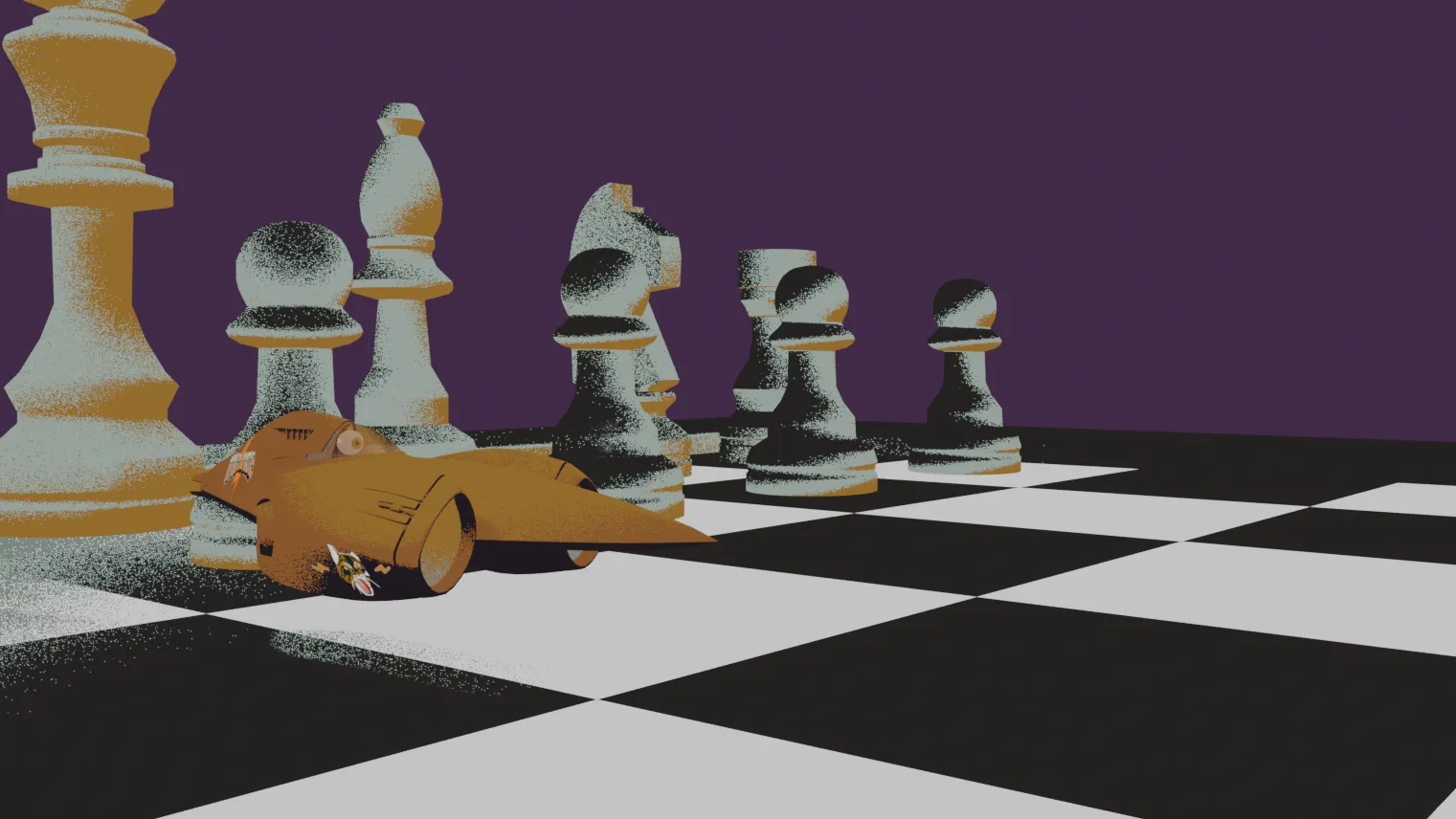
What it unlocks for Mirage: Mirage is a spaceship who understands almost everything except what being alive means. This development sharpens her tragedy: machines are gaining bodies, yet a body capable of control is not the same as embodiment as lived experience.
A useful distinction for the project:
- Machine embodiment: locating, acting, correcting, completing.
- Human embodiment: sensing, needing, suffering, desiring, relating—and being changed by what happens.
The new frontier is therefore not “Can the machine enter the physical world?” It is “Does anything matter to it once it arrives?”
5. AI is becoming an environment before society has consciously chosen it
2026 AI Index Report
Stanford Institute for Human-Centered AI, July 2026. Report overview
What changed: Stanford reports that generative AI reached approximately 53% population-level adoption within three years, while 88% of surveyed organizations now use AI in some form. Industry produced more than 90% of the year’s notable frontier models. Capabilities, investment and everyday adoption are therefore accelerating together—not sequentially.
Why it matters: AI is no longer simply a tool people occasionally decide to use. It is becoming part of the perceptual and institutional environment through which decisions, knowledge, work and human worth are mediated. Yet the systems defining that environment remain concentrated within a small number of companies.
What it unlocks for Mirage: This supplies strong evidence for the Double-M: a machine becomes most powerful when it disappears into normality. The crucial question is not only whether AI becomes intelligent, but what forms of attention, imagination and personhood survive after people begin thinking through it continuously.
For the Mirage website:
AI did not need to become conscious before it began reorganizing consciousness.
That may be one of the project’s clearest bridges between the technological and the perceptual.
Mirage signal of the week
The boundary between prediction and participation is becoming the decisive boundary.
Brains predict. Institutions predict. AI models predict. Robots now predict the next phase of their own actions. Prediction enables extraordinary intelligence—but it can also trap a system inside what its history makes imaginable.
Mirage’s distinctive territory may be the moment prediction breaks open: when the body, another person, grief, beauty, mystery or conscious choice introduces something the existing model cannot assimilate without changing.
The question opened for the work:
If every intelligent system constructs the world through what it already expects, what allows a human being to meet reality before turning it into more of the past?