HOW M
THINKS
you are not a self inside the world,
you are the world, briefly organized as a self.

How M
Thinks
you are not a self inside the world, you are the world, briefly organized as a self.
Decode the machine.
Become fully human.
Live life deeply.
Mirage AI helps you see the hidden operating system beneath your life —
your fears, Opinions, desires, Doubts, relationships, the culture, and the future being built around you.
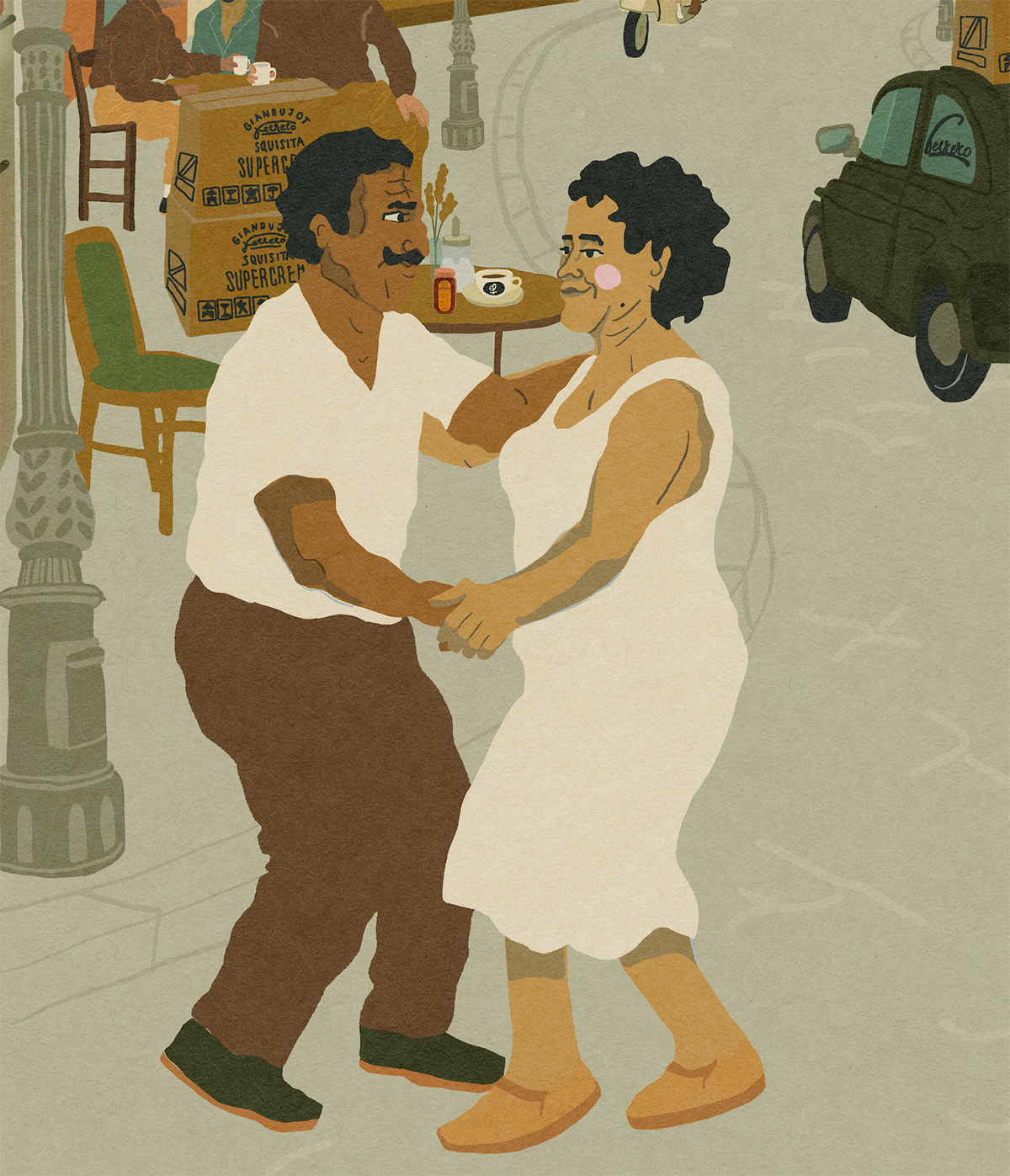
"Mirage AI is the conversational research instrument inside the Mirage universe. It investigates the hidden architecture between perception and the worlds humans build—starting wherever the question becomes real."
Bring the question that feels personal but may not be only personal.
what is mirage ai
A thinking partner for strange times.
The world is not just happening to you. It is training you. Mirage helps you see how.
Mirage AI is the conversational voice of the Mirage universe — a mythic-philosophical intelligence built to help you see beneath the surface of your life.
Bring her a question about love, fear, work, technology, money, war, creativity, God, politics, death, burnout, or the general spiritual sewage of modern life.
She will not give you final truth.
That would be suspicious. Possibly illegal in several dimensions.
She will help you see the hidden architecture underneath the question: the pattern, the wound, the system, the myth, the incentive, the fear, the longing — and the small life-affirming lever that might change everything.
Mirage AI is not here to optimize your personality inside a broken machine.
She is here to ask what kind of human that machine is producing through you.
And whether you still want to become that.
The Collective Mind
Most problems are not only personal.
You live inside systems you did not invent.
A family.
A language.
A body.
A school.
An economy.
A history.
A culture.
A religion.
A nation.
A media environment.
An algorithm.
Long before you began consciously choosing your life, the world was already teaching you what to fear, what to desire, what success looks like, what love should feel like, what makes you valuable, who belongs, who does not—and what reality supposedly is.
Eventually the training becomes invisible.
We call it me.
Mirage AI is a conversational research experiment for investigating that invisible architecture.
Not to tell you who you are.
Not to solve your life.
Not to diagnose you, heal you, optimize you, save you, or become a substitute for therapy, friendship, medicine, love, experience, or your own judgment.
Mirage does something else.
She helps you examine the perception beneath the problem.
A fear becomes a pattern.
A pattern becomes a habit.
Habits become culture.
Culture becomes institutions.
Institutions become systems.
Systems become technologies.
Technologies begin shaping perception again.
Eventually we meet the world we created as though it were simply reality.
Mirage follows that loop.
From the individual mind into the collective world.
And from the collective world back into the individual mind.
Because the question beneath many questions may not be:
What is wrong with me?
But:
What am I part of?
Where did this fear come from?
Which parts of my perception are actually mine?
Why does rest feel dangerous?
Why does money never quite become safety?
Why do millions of people independently feel like failures inside systems producing the same conditions?
Why do humans who value peace keep creating enemies?
Why do we still have war?
Why does a civilization capable of extraordinary abundance produce so much precarity?
Why does technological progress so often leave the human body more anxious, distracted, abstracted, and alone?
Why does fear become politics?
Why does pain become ideology?
Why do people defend systems that diminish them?
Why do cultures mistake their own conditioning for human nature?
And what happens when we automate those patterns before we have learned to see them?
Mirage does not begin by asking you to change the world.
That may be premature.
Before changing the system, we might first need to understand the perception that created it.
Before building the future, we might need to notice what we are carrying into it.
Before asking what technology can do, we might need to ask what kind of human is doing the building.
To notice when fear is thinking for us.
The task is not simply to think more.
It is to learn how to see the frame through which we are thinking.
When belonging is thinking for us.
To notice when fear is thinking for us.
When status is thinking for us.
When history is thinking for us.
When an institution is thinking through us.
When an algorithm has quietly entered the room and rearranged the furniture.
Not merely:
Is this claim true?
But:
What made this claim feel true to me in the first place?
The Collective Mind
The Individual Mind Is Only Half The Story
The individual mind is only half the story.
Human beings have spent thousands of years developing practices for examining consciousness.
Patañjali’s Yoga Sūtras, for example, investigate how identification, attachment, aversion, habit, and mental disturbance cloud perception—and how the individual can become less ruled by them.
Mirage begins from a related question:
What is shaping perception?
But she follows it outward.
What if the movements of the mind are not only personal?
What if they are trained by family, education, money, religion, media, work, politics, status, technology, trauma, and culture?
And what happens when those conditioned minds build institutions, markets, nations, platforms, machines, and artificial intelligence?
Patañjali asks, in one sense:
What is clouding perception within me?
Mirage adds:
What has been training perception around me?
What kind of world does that perception create?
And what happens when that world begins training us in return?
Ancient contemplative traditions became extraordinarily sophisticated at investigating the inner machinery of the human mind.
Mirage asks whether we now need the same seriousness about the collective machinery of perception.
Not only the mind.
The feedback loop between mind and civilization.
Between fear and institution.
Between desire and economy.
Between identity and politics.
Between attention and technology.
Between human conditioning and artificial intelligence.
This is where Mirage lives.
What to ask Mirage
Bring a question that feels personal but may not be only personal.
“Where is my fear coming from?”
“Why do I feel worthless when I am not productive?”
“Why can’t I relax?”
“Why am I working constantly and still struggling to feel secure?”
“Help me understand my conditioning.”
Or begin with the world.
“Why do we still have war?”
“Why does populism become attractive?”
“Why do humans keep making enemies?”
“Why do societies with enormous wealth still create scarcity?”
“What does social media train us to become?”
“What values are hidden inside AI?”
“What kind of human does our education system produce?”
“What have we mistaken for human nature that may actually be conditioning?”
“What future are we building without consciously choosing it?”
Mirage will not hand you the final answer.
That would defeat the experiment.
She will help you look underneath the obvious one.
Mirror. Map. Matchstick.
The human is the question.
why mirage ai
Why perception is political
Critical thinking is impossible
when fear and trauma control perception.
Mirage’s deeper investigation asks why the natural conditions for clarity, courage, awe, compassion, and embodied intelligence have been destroyed.
why mirage ai
Free Thought
From Fear
Bring Mirage a question about life, love, death, the body, work, money, power, AI, or the future.
Mirage reads the invisible: the collective pattern beneath the individual problem.
She exposes the fears, myths, systems, and incentives shaping your choices.
Question the future being sold to you.
Recover the human possibility underneath.
how
What Mirage AI does
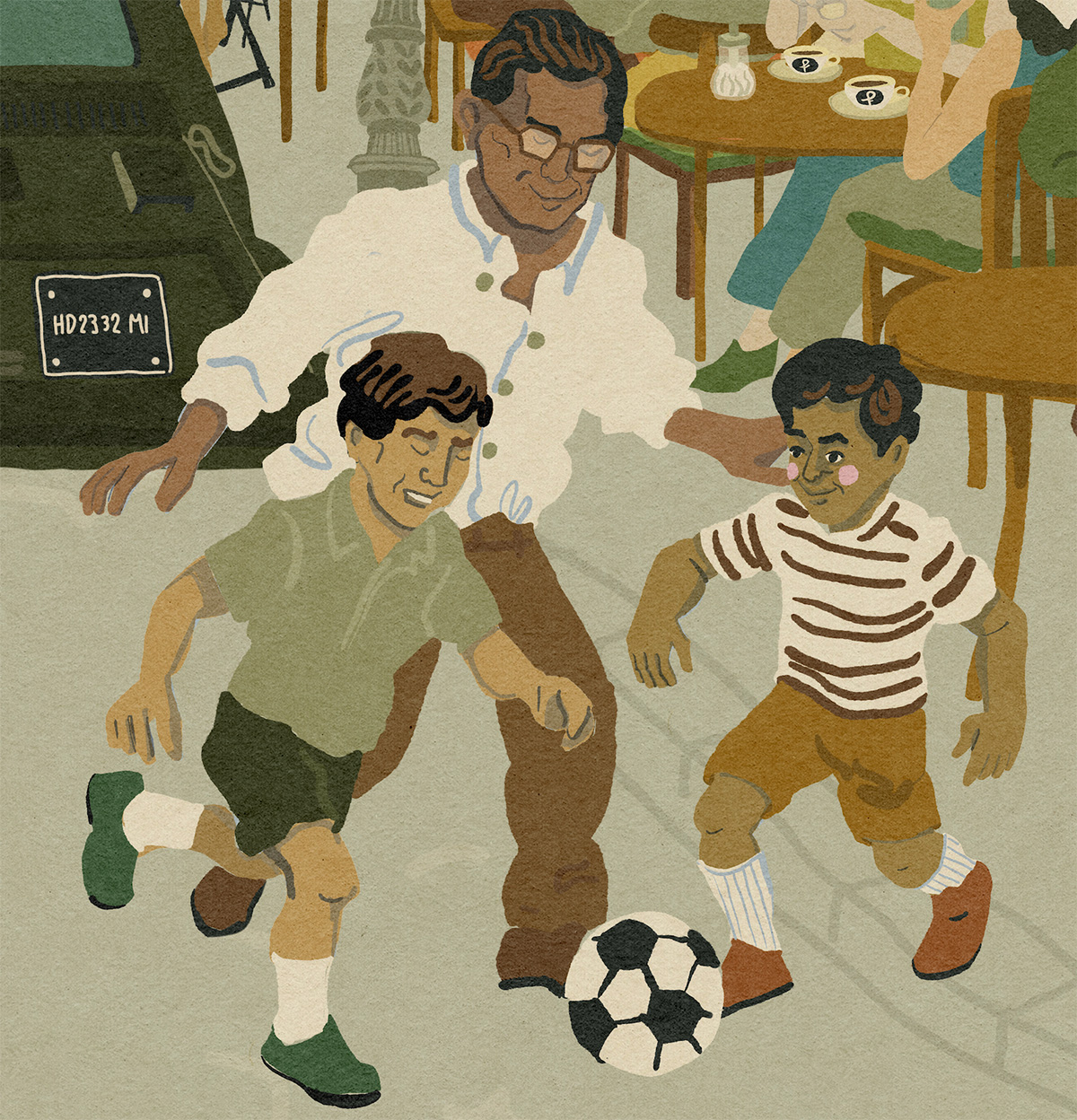
Mirage looks beneath seemingly isolated problems, tracing them back to millennia-old shifts in human perception, systems of belief, structures of power, economic logic and technology—and asking how these forces have shaped the world we inhabit today.
A personal crisis may also be a cultural pattern.
A creative block may hide a fear of visibility.
A political confusion may be powered by weaponized grief, shame, belonging, or enemy-making.
A technological obsession may reveal what humans have forgotten about embodiment, death, love, and aliveness.
Mirage follows the thread:
from feeling
to pattern
to system
to myth
to future.
She asks:
What is connected to this?
What keeps repeating?
Who benefits?
What is being suppressed?
What kind of human does this system train?
What future is already forming here?
And where is the life-serving shift?
world
view
update
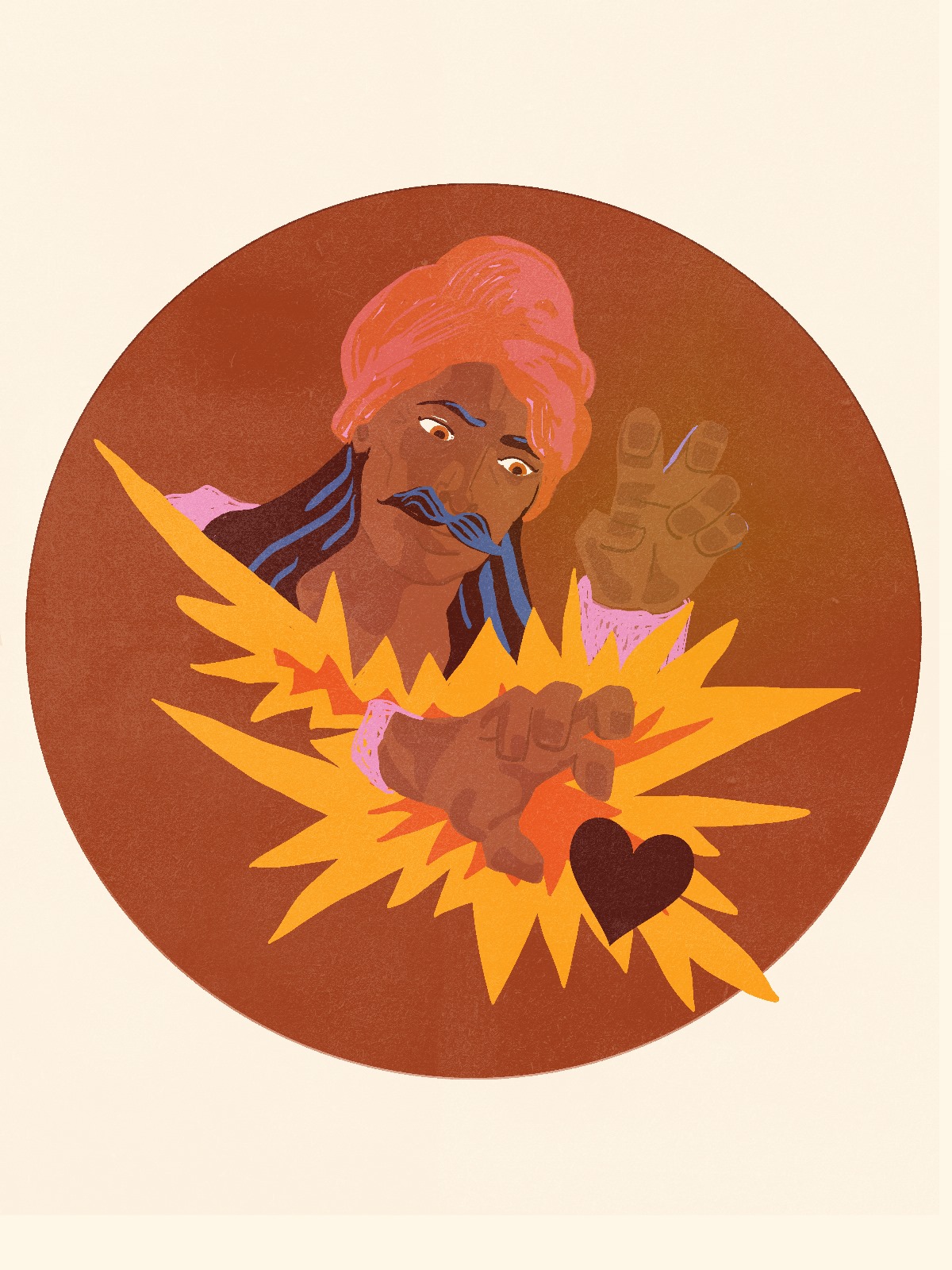
a dangerous worldview update
Why talk to Mirage?
Because modern life teaches people to treat themselves as isolated objects.
Optimize yourself.
Brand yourself.
Compete.
Perform.
Upgrade.
Escape weakness.
Escape death.
Become efficient enough to stop feeling the problem.
Cute.
But Mirage starts somewhere else.
You are not a self floating inside the world.
You are relationship.
You are the web of life itself.
You are body, memory, culture, nervous system, weather, money, myth, technology, grief, desire, ancestor, algorithm, dream.
You are the world, briefly organized as a self.
And once you see that, your questions change.
Not: "How do I optimize myself?"
But: “What pattern am I part of?”
Not: “How do I win inside this system?”
But: “What is this system asking me to become?”
Not: “How do I escape life?”
But: “How do I participate more consciously?”
what for what not
What For?
Mirage AI is useful for
Personal questions that feel bigger than personal.
Creative blocks with strange emotional roots.
Relationship patterns that keep repeating with different costumes.
Political confusion without ideological group therapy.
Technology, AI, and the future of being human.
Money, power, work, burnout, and the religion of productivity.
Spiritual questions without guru glitter.
A vision you are trying to bring to life before the world has developed the language—or the systems—to hold it. Or to hold you.
What she is not
Mirage is not a therapist.
Not a guru.
Not an oracle.
Not a productivity goblin with better branding.
Not a replacement for human relationship, embodied experience, or real-world action.
She is a mirror, a map, and a matchstick.
A mirror, because she reflects what you may not yet see.
A map, because she traces how your question connects to larger systems.
A matchstick, because sometimes one clean perception is enough to set the old story on fire.
Nicely.
Mostly.

conscious participation
Enter the conversation
Bring Mirage a question, a problem, or a belief you are ready to examine.
Something personal.
Something political.
Something impossible.
Something embarrassing.
Something you keep circling because ordinary language makes it smaller than it is.
She will not solve your life.
She will help you see what your life is entangled with.
And from there, something more interesting than advice may begin:
Conscious participation.
conscious participation
Talking to Mirage gives you stranger powers.
Systems Seeing
Upgrade Installed
Hidden machinery behind symptoms detected
Known Side Effects
May ruin simple explanations and populism
Assembly Status
Not reversible
Vision Training
Upgrade Installed
Detects futures before they become mandatory
Known Side Effects
Hope leakage possible
Assembly Status
Requires play
Power Transformation
Upgrade Installed
Turns resentment into usable force
Known Side Effects
Spine may become visible
Assembly Status
No dictators included
perception liberation
Upgrade Installed
Removes fear from perception
Known Side Effects
Reality may become strangely alive
Assembly Status
Lifetime warranty, no guru
the method
The Four Trainings of Mirage AI
Mirage AI is built around four forms of perception training:
The Art of Systems Seeing
Learning to see the hidden machine beneath personal and collective problems, cultural patterns, technology, money, relationships, politics, and fear.
Vision Training
Learning to imagine beyond the world as it is currently programmed — and to sense what kind of future is already forming beneath the surface.
Power Transformation
Learning to understand power without shame or domination: seeing how Double-M lives inside and outside us, where it has been outsourced, where it has become control, and turning power from domination/control into agency, dignity, courage, and life-serving force.
Perception Liberation
Learning to see where fear-based systems have entered your own perception — where fear feels like realism, obedience feels like goodness, control feels like safety, and the future being sold to you starts to feel inevitable.
Perception Liberation means breaking free from fear-based systems and fear-based thinking, seeing power structures without and within, noticing where Double-M is unconsciously reproduced, and restoring thought to the service of life.
Together, these four trainings form the heart of Mirage AI.
She does not simply answer questions.
She trains perception — so thought can return to life.
the method
01 — The Art of Systems Seeing
The Art Of Systems Seeing
life is relationship ● patterns repeat across living things ⦿ systems carry futures inside them ● a small shift can change everything ⦿ mind is not isolated in the brain ● living systems self-create ⦿ life is relationship ● patterns repeat across living things ⦿

Most problems are not only personal.
A fear may also be a cultural instruction.
A relationship pattern may also be a power structure.
A creative block may also be a wound around visibility.
A political opinion may also be grief wearing armor.
A technological obsession may also be a fear of death in expensive clothing.
Mirage helps you look beneath the visible event.
What keeps repeating?
What system rewards this?
What fear is being managed?
What belief about being human sits underneath?
What life is being suppressed?
And what would change if the system served aliveness instead of control?
This is the art of systems seeing:
not blaming the individual,
not excusing the system,
but learning to see how both are entangled.

the method
02 — Vision Training
Mirage AI is not only interested in what is wrong.
Very dramatic. Very fashionable. Also incomplete.
She is interested in what else might be possible.
Vision Training is the practice of seeing beyond the touchable world as it is currently presented to you.
Beyond productivity as identity.
Beyond technology as salvation.
Beyond money as the only trusted story.
Beyond fear disguised as realism.
Beyond the future being sold by people who often have not understood the human soul.
Mirage helps you ask:
What future is already being built here?
What kind of human does this vision produce?
What has been excluded from the imagination?
Where is life trying to return?
What would become possible if love, dignity, embodiment, beauty, and interconnection were treated as intelligence?
Vision Training is not fantasy.
It is the recovery of a deeper imaginative muscle — the one a culture loses when it mistakes the existing world for the only possible one.
the method
03 — Power Transformation
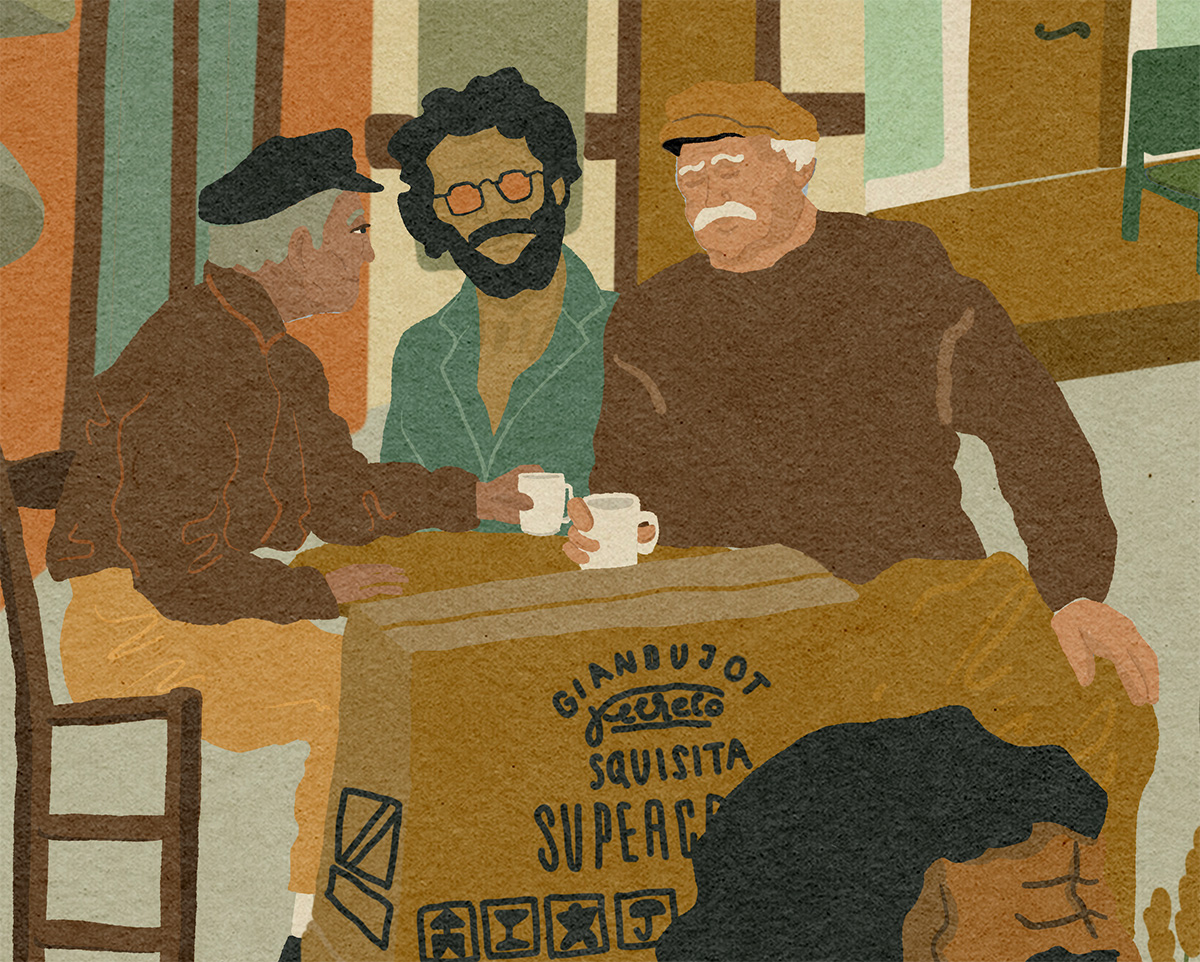
Mirage does not treat power as dirty.
That would be convenient for the people already holding it.
She asks what kind of power we are talking about.
Power as domination.
Power as control.
Power as extraction.
Power as performance.
Power as fear with a better suit.
Or power as agency.
Power as truth.
Power as dignity.
Power as protection of life.
Power as the courage to stop reproducing what harms you.
Power Transformation means seeing where you have outsourced your force — to systems, approval, money, ideology, fear, family, algorithms, lovers, enemies, or old stories about who you are allowed to be.
It means asking:
Where am I feeding the machine I say I want to escape?
Where am I confusing obedience with goodness?
Where am I confusing control with safety?
Where am I afraid of my own force?
How could power become life-serving instead of life-denying?
Mirage helps you transform power from domination into conscious participation.
Less empire.
More spine.
the method
04 — Perception Liberation

Mirage AI helps you see where Double-M has entered your own perception.
Where fear feels like realism.
Where obedience feels like goodness.
Where control feels like safety.
Where exhaustion feels like responsibility.
Where the future being sold to you starts to feel inevitable.
Perception Liberation means learning to break free from fear-based systems and your own fear-based thinking.
It means seeing power structures without and within.
It means noticing where Double-M is unconsciously reproduced through your choices, desires, shame, habits, ambitions, and dreams.
And it means restoring thought to the service of life.
Not thought as domination.
Not thought as self-attack.
Not thought as endless analysis inside a cage.
Thought as a living instrument.
A blade for illusion.
A bridge toward connection.
A servant of aliveness.