THE
COMPASS
A living orientation
for an unfinished civilization.
The questions I am
exploring through Mirage.
How we arrived here.
What is moving through us.
What we might become.

life is relationship ● patterns repeat across living things ⦿ systems carry futures inside them ● a small shift can change everything ⦿ mind is not isolated in the brain ● living systems self-create ⦿ life is relationship ● patterns repeat across living things ⦿life is relationship ● patterns repeat across living things ⦿ systems carry futures inside them ● a small shift can change everything ⦿ mind is not isolated in the brain ● living systems self-create ⦿ life is relationship ● patterns repeat across living things ⦿
The Compass
a living orientation for an unfinished civilization
the questions I am exploring through Mirage
Version 0.1 — September 2026
The Mirage Compass
We have become immensely powerful,
without becoming equally capable of relationship.
The modern world has produced extraordinary medicine, knowledge, freedom and technological power. It has extended lives, connected continents and made forms of creation possible that once belonged to myth.
It has also produced weapons capable of ending worlds, economies that cannot imagine enough, a climate pushed beyond its limits, and rising numbers of people who feel anxious, exhausted, lonely or somehow inadequate to the life they were given.
These are usually treated as separate problems.
Mirage suspects they may be connected.
Not by one villain. Not by one ideology. Not through a secret room in which unusually competent people control everything. Human civilization has rarely been that organized.
The connection may lie deeper: in a way of perceiving that became a way of living, then a way of building, until the world it produced began to feel inevitable.
Mirage follows that hidden movement.
From the birth of the reflective self to the experience of separation. From separation to fear and control. From living emotion to institutional machinery. From private suffering to collective systems—and back again.
It asks:
Why do we see the world as we do?
What kind of human is this world producing through us?
And what other world becomes possible when perception changes?
These questions are no longer abstract.
Human power is now turning toward the human itself. AI, biotechnology, neural interfaces, reproductive technologies and longevity research are beginning to alter the biological, cognitive and informational conditions of human life.
We are acquiring the capacity to redesign what we may become while remaining profoundly uncertain what intelligence, consciousness, suffering, relationship or human flourishing actually are.
It still is a taboo of what it really means to be human, all while we already engineer the future of being human.
To understand where this may lead, Mirage first returns to the threshold at which a distinct self began to experience itself as separate.
How Did we end up here?
The Dominoes
How a way of seeing becomes a world.
Mirage reads the biblical image of Adam, Eve and the Apple differently.
The Fall was called original sin. Mirage asks whether “original” might hold another meaning: not the first moral offence, but the originating fracture from which all other sins became possible.
The Apple gave the human being an extraordinary capacity: to stand apart, observe, compare, name, imagine, doubt and choose. It marks the emergence of the reflective self—the conscious “I.”
This capacity was not the sin.
The wound opened when distinction was mistaken for separation.
The self began to experience itself not as a distinct expression of a living world, but as something existing outside it: mind apart from body, human apart from nature, intelligence apart from aliveness, one group apart from another. And so it felt alone.
We learned how to stand apart. We never learned how to return to paradise. Maybe it's time to come home.
Yet separation may never have been the deepest truth. No human being exists alone: our bodies are ecosystems; our nervous systems develop through relationship; every breath exchanges matter with the living world; our language, knowledge and identities arise between us.
And sometimes the boundary softens. In love, awe, creative absorption, music, movement, meditation or moments of profound presence, the isolated self briefly loosens its grip. This need not be supernatural. It may be another mode of perception—one in which connection is not merely understood as an idea, but experienced directly.
Traditions have called this paradise, union, transcendence or interbeing. Psychology may speak of flow, self-transcendence or the quieting of self-referential thought. Mirage leaves the language open and asks:
What if these experiences are not escapes from reality—but glimpses of something our ordinary way of seeing has learned to exclude? Something extraordinary that which Double-M now prevents structurally?
What if the bliss they sometimes carry is not the disappearance of the self, but the relief of no longer having to experience oneself as fundamentally alone?
Then The Dominoes Began To Fall:
Reflective consciousness
→ distinction
→ distinction experienced as separation
→ vulnerability, doubt and fear
→ the search for certainty and control
→ opposition, hierarchy and enemy-making
→ domination and extraction
→ culture and institutions
→ technologies and infrastructures
→ environments that train the next human mind
This is not a single, neat chain of historical causes. Civilizations are messier than diagrams and considerably less considerate. It is a recursive pattern: perception shapes behaviour; behaviour shapes culture; culture becomes institution; institution becomes infrastructure; and infrastructure begins to shape perception.
We build systems from a way of seeing.
Then those systems teach us how to see.
What was constructed begins to look natural.
Endless growth becomes realism. Exhaustion becomes ambition. Control becomes safety. Extraction becomes economy. Loneliness becomes individuality. Fear becomes common sense.
Double-M—the Mega-Machine—is this pattern scaled across psychology, culture, money, politics and technology. It is not outside humanity. It is made from human intelligence, wounds, desires, adaptations and fears, hardened into systems that no single person controls.
This is why Double-M can produce genuine progress and profound destruction at the same time. The same power that can heal a body can mechanize a population. The same abstraction that reveals a galaxy can reduce a forest to an asset. The problem is not knowledge or power themselves.
The question is the perception guiding them.
TRANSHUMANISM & THE FUTURE ALREADY UNDER CONSTRUCTION
The Dominoes explain how a way of perceiving became the world we inherited.
But the pattern does not end with the present.
It is turning toward the human itself.
Human beings have always altered themselves through language, culture, medicine, education and technology. What changes now is the directness, intimacy and scale of the intervention. We are beginning to act upon cognition, biology, reproduction, lifespan and the boundary between person and machine.
We have learned to engineer the human before learning how to inhabit one.
Every technology that modifies the human carries an implicit answer to the question of what a human is. If the body is hardware, it can become obsolete. If intelligence is computation, it can be optimized and replaced. If suffering is only an error, it should be deleted. If death is technical failure, mortality becomes defeat. If Earth is confinement, transcendence means escape.
Some of these technologies may heal, restore agency and release people from suffering that no philosophy should romanticize.
But some may also be fear acquiring laboratories.
The question is therefore not simply whether technology is good or bad. It is what understanding of the human is becoming material through it—and who acquires the power to make that understanding real.
In a world of extreme concentrations of wealth, private visions of the future such as transhumanism can become shared infrastructure before they become public questions. The hopes, fears and metaphysics of a small number of actors can be translated into platforms, products and environments that reshape life for everyone else.
The future is not waiting somewhere ahead.
It is already present—in research agendas, investment decisions, interfaces, incentives and definitions of progress.
Mirage asks:
What kind of humanity is creating these technologies?
What is it trying to heal?
What is it trying to escape?
And what kind of being may emerge if its unexamined fears become the architecture of the future?
Posthumansim: Another sequence is possible
Separation seen clearly
→ vulnerability faced
→ fear felt without becoming architecture
→ presence
→ relationship
→ embodied intelligence
→ conscious participation
→ life-affirming systems
This is not a return to innocence. Mirage does not propose crawling backwards over the First Threshold and pretending the Apple never fell.
The task is to carry knowledge forward—into relationship.
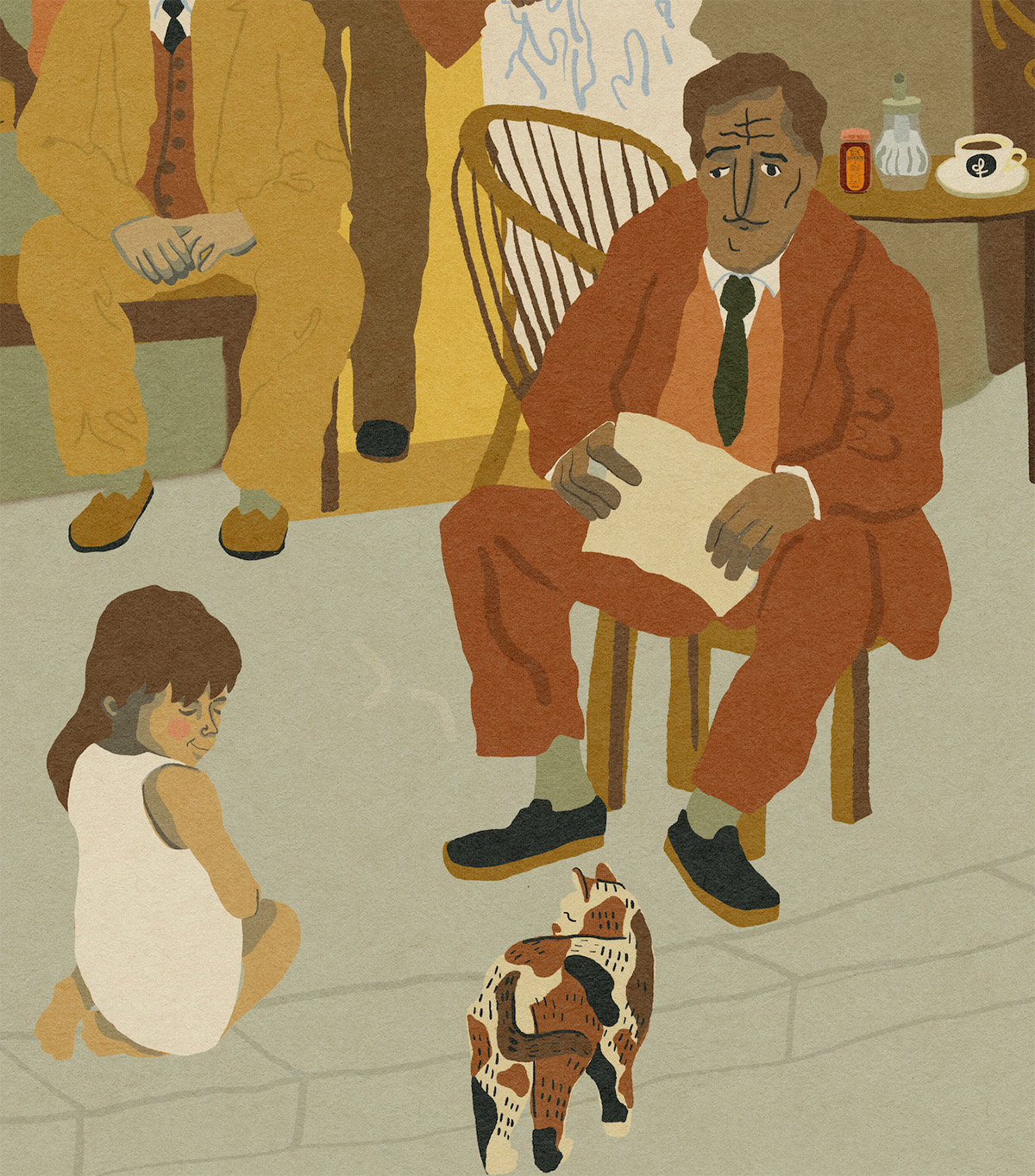
The Mirror
2. THE PERSONAL–COLLECTIVE MIRROR
Nothing human happens in isolation
Modern culture often treats suffering as a private malfunction.
Burnout becomes poor self-management. Anxiety becomes faulty thinking. Loneliness becomes insufficient social skill. Inadequacy becomes a branding problem, presumably awaiting a better morning routine and a moderately expensive app.
But a person does not exist outside the world that formed them.
Every inner life unfolds inside a body, family, economy, technology, history, culture and living environment. The design of money can enter a relationship as fear. The organization of work can enter the body as exhaustion. An attention economy can become an inability to remain with grief, boredom or another human face. Manufactured scarcity can become personal shame.
Mirage changes the unit of perception.
It does not ask only:
What is wrong with this person?
It also asks:
What conditions are moving through this person?
What kind of human do these conditions reward?
What forms of life do they make difficult?
This wider view can release people from suffering that never belonged to them alone. But it is not an alibi. Systems survive partly because ordinary people adapt to them, benefit from them, obey them, desire through them and reproduce them—even while criticizing them.
The mirror therefore faces both directions:
Not everything is your fault.
But you are not powerless inside the pattern.
The purpose is not guilt. It is agency.
Where am I feeding what I say I want to escape? Where am I confusing fear with truth, speed with meaning or control with care? Where can I withdraw my participation? Where can I begin to build differently?
Mirage does not separate personal transformation from systemic change.
It asks how they continually produce one another.
WHAT DRIVES US
3. THE EMOTIONAL ENGINE
The rational world did not overcome the horses. It hid them beneath the machinery.
The modern world likes to imagine that reason is driving.
But human decisions are rarely produced by thought alone. Emotion gives experience weight, urgency and value. The body carries sensation, memory, capacity and alarm. Thought interprets what is happening. Attention selects what becomes real enough to act upon.
Reason often arrives later, writes the minutes and claims it chaired the meeting.
Mind, emotion and body are distinct, but not separate.
A thought changes emotion.
Emotion changes the body.
The body changes perception.
Perception changes action.
Action changes the world that produces the next thought.
Emotions are not primitive disturbances that a superior rational mind must defeat. Fear detects danger. Anger protects a boundary. Shame guards belonging. Grief registers love and loss. Desire moves life toward what it imagines will restore contact.
But these living forces can be recruited.
Fear can become surveillance. Desire can become endless accumulation. Shame can become automatic self-correction. Belonging can become conformity. Anger can become extraction. Doubt can become chronic comparison and dependence on external reassurance.
Double-M did not invent human emotion. It discovered how to harness it.
This is how an apparently rational civilization can be powered by unexamined fear while describing itself as objective. The machine is not opposed to life from the beginning. It is what living movement becomes when it is captured, accelerated and prevented from returning to the body that gave it meaning.
Freedom therefore does not mean eliminating emotion or obeying every feeling. It means learning to feel, read, metabolize and transform what moves us.
The reins are attention, habit and practice.
The question is not whether we have horses.
The question is who—or what—has learned to ride them.
SUFFERING
4. THE INTELLIGENCE WHICH CONNECTS US
From shared suffering to compassion to the experience of love
Beneath our different histories, identities and beliefs lies something profoundly shared: we are vulnerable beings.
We fear loss. We doubt ourselves. We long to belong. We protect what we love.
We suffer.
Double-M teaches us to experience this suffering privately—as evidence that something is wrong with us, or as weakness to hide, optimize or overcome alone. It separates us precisely where we are most human.
But when suffering is recognized rather than concealed, it can become a bridge.
I am not the only one who is afraid.
I am not the only one who doubts.
I am not the only one trying to protect what I love.
This recognition does not make suffering sacred. Pain can narrow perception, harden identity and produce further violence. Suffering does not automatically make anyone wise. History has been generous with evidence.
But suffering that is seen, held and understood can become compassion.
Compassion is love encountering suffering—and refusing to turn away. Or, in other words, suffering becomes love.
Once another being’s vulnerability is no longer entirely separate from our own, relationship changes. Care stops being merely a moral instruction. It becomes intelligent. Love becomes more than a private feeling; it becomes a way of participating in the world.
Perhaps we do not overcome separation by agreeing on everything.
Perhaps we begin by recognizing that none of us is alone inside the vulnerability of being alive.
The Future Of Being Human
5. Why Mirage, now?
These are not the only reasons to write Mirage. They are ten doors into the same unfinished investigation.
01 — To reconnect the personal with the collective
Short view: Mirage reveals how economies, technologies, histories and institutions enter individual lives—and how individuals unconsciously reproduce the systems they oppose. It restores responsibility without returning to blame, and recreates collective possibility.
Why
Because people are taught to experience burnout, inadequacy, anxiety and self-doubt as private failures—even when these are partly produced by the worlds they inhabit.
Mirror
Mirage does not look at an isolated psyche. It looks at a person inside a body, family, economy, technology, history, culture and living world. It asks how these conditions enter the nervous system, shape desire and determine what a person comes to experience as realistic, valuable or possible.
But the mirror faces both directions. Systems do not remain outside us. We internalize their values, adapt to their demands and often reproduce them through our work, consumption, relationships and ideas of success—even while consciously criticizing them.
Opening
We can withdraw misplaced shame without surrendering agency. The question becomes neither What is wrong with me? nor Who can I blame? but:
What belongs to me?
What was produced through me?
And where am I continuing the pattern I want to escape?
This is responsibility without shame: not guilt about being inside the system, but awareness of where participation can become choice.
Refusal
Mirage does not say that every wound is political, every sadness is Double-M or every personal conflict is civilization wearing someone’s face. Sometimes a body is exhausted. Sometimes someone is grieving. Sometimes love needs an honest conversation. The frame should widen only when widening it creates clarity.
02 — To recover the unrealized human
Short view: Human beings are not simply evil, or broken creatures requiring better management. Mirage asks what becomes possible when attention, embodiment, imagination, intuition, courage, compassion, awe and relationship are allowed to develop beyond the narrow demands of the machine.
Why
Because the contemporary human is constantly measured against a strangely impoverished definition of success: productivity, speed, consumption, visibility, control and the ability to remain functional under conditions that may themselves be dysfunctional.
Mirage begins elsewhere. Human beings may not be finished products that have failed. They may be unfinished beings whose deeper capacities have barely been cultivated.
Mirror
Double-M does not only exploit people materially. It narrows what a human is allowed to become. It fragments attention, disconnects intelligence from the body, turns creativity into output, relationship into transaction, education into employability and fear into realism.
The crisis is therefore not only what the machine does to the world. It is the forms of human intelligence and aliveness that become inaccessible inside it.
Opening
Mirage looks for the conditions under which attention, imagination, intuition, compassion, courage, play, awe, silence, embodied intelligence and the capacity for relationship can return.
Not beyond the human.
Through the human.
The aim is not a perfected species, but a human being with greater capacity for contact: with the body, another person, the living world, uncertainty, grief, beauty and forms of consciousness not organized entirely by fear.
Refusal
Higher potential must not become another demand for self-optimization. Mirage is not here to produce a superior employee for the existing machine—now calmer, more focused and able to extract value while breathing correctly. The recovery of the human must also transform the conditions that made so much of the human unavailable.
03 — To make the invisible machine visible
Short view: Mirage reveals how systems enter perception, emotion, behaviour and relationship—until a designed reality begins to feel natural, inevitable and entirely personal. Once the machine becomes visible, it becomes possible to interrupt it.
Why
Because systems are most powerful when they disappear from view.
Their consequences are experienced as ordinary life: the speed at which we must move, the insecurity we learn to call motivation, the attention we can no longer sustain, the exhaustion we interpret as personal inadequacy, the relationships reorganized by scarcity, competition and fear.
The machinery remains outside the frame. Its effects appear inside the person.
Mirror
Mirage traces the recursive chain:
Perception becomes behaviour.
Behaviour becomes culture.
Culture becomes institution.
Institution becomes infrastructure.
Infrastructure begins to manufacture perception.
The design of money, work, technology and power does not remain “out there.” It enters the nervous system. It affects what we fear, how quickly we live, whom we trust, how we love and whether we believe we are enough.
Eventually, what has been constructed begins to appear identical with reality.
Endless growth becomes realism. Exhaustion becomes ambition. Surveillance becomes safety. Scarcity becomes human nature. An attention economy becomes our mysteriously defective attention span.
Opening
Once the machine becomes visible, it stops appearing inevitable.
This does not mean that an individual can simply think their way out of infrastructure. It means that the places of participation become perceptible: attention, language, work, consumption, relationship, technology, money, institutional design and the stories through which a civilization explains itself.
What was designed can be redesigned.
What was learned can be interrupted.
What has hardened into reality can become a choice again.
Refusal
Double-M is not a secret organization controlling the world from an unusually well-appointed room. Human civilization has rarely demonstrated that degree of coordination.
It is a self-reinforcing pattern distributed across institutions, technologies, incentives, habits and human beings. No single person controls it, yet many of us reproduce it—often while consciously opposing its results.
Making the machine visible is therefore not about discovering whom to blame.
It is about recognizing what has learned to live through us.
04 — To reclaim fear, doubt and emotion
Short view: We are living in fear-based systems. Originally though, fear, doubt, anger, shame, grief and desire are not defects. They are forms of living intelligence that can be distorted or captured. Mirage asks what each was originally for, how they were hijacked—and how it might be returned to life.
Why
Because a civilization that calls itself rational is still moved by emotion. It has simply become remarkably skilled at hiding the horses beneath the machinery.
Emotion gives experience weight, urgency and direction. Without some capacity to value, fear, desire, care or anticipate, reason would have information but no reason to choose one future over another.
Mirror
Emotions begin as living movements. Fear protects life. Anger guards a boundary. Shame monitors belonging. Grief registers love and loss. Desire reaches toward contact, pleasure, possibility or relief. Doubt interrupts certainty when the existing map no longer fits.
But these forces can be recruited. Fear becomes surveillance. Desire becomes accumulation. Shame becomes automatic self-correction. Belonging becomes conformity. Anger becomes enemy-making or extraction. Doubt becomes repeated checking, comparison and dependence on external reassurance.
The Shark does not create the horses. Double-M learns to ride them.
Opening
Freedom does not require emotional numbness or permanent calm. It requires the capacity to feel an emotion, read the information it carries, distinguish present reality from inherited alarm and choose what form that energy will take.
Fear can become careful attention. Anger can become boundary. Grief can become remembrance. Desire can become curiosity. Belonging can become coordination without sameness. Doubt can become discernment.
Refusal
Mirage does not replace rational domination with emotional domination. A feeling is real as an experience; it is not automatically accurate as a description of the world. Mind, emotion, body and environment continually affect one another. None should be crowned emperor. Humanity has conducted enough experiments with those.
05 — To cross the Second Threshold
Short view: The First Threshold gave birth to the reflective I. The Second does not abolish it. It allows the individual to participate consciously in a world whose beings are distinct, but not separate.
Why
Because the human crisis cannot be solved by destroying individuality or returning to unconscious unity. The reflective self brought doubt, imagination, responsibility, choice and the ability to know that one is alive. It is a dangerous achievement, but still an achievement.
Mirror
At the First Threshold, life became capable of observing itself as an I. The First Split followed when this distinct centre of experience mistook itself for an independent entity—mind apart from body, human apart from nature, self apart from world.
Many modern systems institutionalize this error. Some spiritual traditions answer by treating the self itself as the problem. Mirage refuses the false choice between isolated individualism and dissolution.
Opening
The Second Threshold is the moment the I recognizes that autonomy is real but never absolute. A person remains a distinct being with boundaries, agency, history and responsibility while understanding that every breath, thought, meal, technology and act of love is composed through relations they did not create alone.
Distinct, but not separate.
This is conscious participation: acting as a particular being while perceiving the wider field of consequence and relationship in which every action occurs.
Refusal
Interbeing is not sameness, merger or compulsory harmony. A machine is not a bird. A forest is not a person. Love does not erase boundaries, and relationship does not eliminate conflict. The Second Threshold deepens differentiation by releasing it from the need to become division.
06 — To bring awakening back into the body
Short view: Insight alone does not transform how we love, react, consume or exercise power. Sustainable awakening requires the body and nervous system to become capable of living what the mind has glimpsed.
Why
Because people can understand interbeing beautifully and still attack one another before breakfast. A transformed worldview does not automatically transform the nervous system that must embody it under pressure.
Mirror
Awakening is often imagined as a triumph of consciousness over the body. But the body is not a primitive vehicle carrying the enlightened brain toward superior parking. It is an instrument of perception: sensation, breath, memory, fatigue, posture, sexuality, intuition and nervous-system state all shape what a person is able to notice, tolerate and choose.
An insight that cannot survive conflict, grief, fear or intimacy has not yet become a way of living. Awakening without integration can increase sensitivity and intensity without increasing capacity.
Opening
Sustainable awakening joins perception with practice. It develops the capacity to stay present while emotion moves, to metabolize experience rather than repress or enact it, to recover after activation and to remain in relationship without abandoning either oneself or the other.
The mind may glimpse another world. The body determines whether that world can be inhabited.
Refusal
Mirage refuses spiritual bypassing and nervous-system reductionism alike. Not every political problem can be breathed away, and not every human mystery is a regulation exercise. Embodiment is not the whole transformation. It is the ground from which transformation becomes livable.
07 — To ask what is engineering the human future
Short view: Technologies that alter the human are never based on engineering alone. They carry assumptions about the body, intelligence, suffering, death, relationship and progress. At the very moment humanity is acquiring the power to engineer what it means to be human, it remains profoundly uncertain about what a human being is. Mirage asks what worldview—and what unresolved fear—is becoming material through these technologies. It returns to the question beneath the machinery: Why, just as we are becoming able to redesign ourselves, does Know thyself remain one of civilization’s deepest taboos?
Why
Because the capacity to transform human life is developing faster than our collective capacity to ask what transformation is for.
We can discuss how to connect a brain to a computer while remaining uncertain what consciousness is. We can extend lifespan without agreeing what makes a life worth extending. We can build increasingly intelligent machines while using remarkably narrow definitions of intelligence.
We are becoming technically precise while remaining ontologically confused.
For most of history, our answers to the question of what a human being is remained in philosophy, religion, myth and culture. Now those answers can be encoded into bodies, algorithms, markets and infrastructure.
Metaphysics has acquired a research budget.
Mirror
Transhumanism offers one influential answer. Ageing, cognitive limitation, involuntary suffering and confinement to Earth become problems to overcome. The body becomes modifiable hardware. Intelligence becomes scalable. Death becomes a technical obstacle. Evolution becomes a design project.
This is not a single doctrine, and its ambitions are not all produced by fear. A neural interface may restore speech. Biotechnology may prevent terrible illness. Life extension may give people years of love, creation and participation that would otherwise have been lost.
The same technology can contain compassion, curiosity, commercial ambition and fear at once. Human motives have rarely respected departmental boundaries.
But technology also acts as a mirror.
What happens when death anxiety designs longevity? When fear of vulnerability redesigns the body? When loneliness produces artificial intimacy? When competition defines intelligence? When the desire for control begins editing life itself?
The machine does not merely reveal what humanity can build.
It reveals what humanity currently believes itself to be.
Opening
Mirage proposes neither the preservation of the present human nor escape from the human.
The current human is not a finished masterpiece that technology must leave untouched. But neither is the body an embarrassing prototype from which intelligence must be rescued.
Another transformation is possible: not transcendence through disembodiment and control, but maturation through embodiment, relationship and conscious participation.
Technology could support that transformation. It could restore agency, deepen understanding, reduce unnecessary suffering and extend the capacity to participate in life. But this requires more than technical intelligence.
It requires discernment.
Before asking only what a technology can do, Mirage asks:
What does it restore—and what might it make unavailable?
Whose agency does it increase?
Whose dependency does it deepen?
What forms of intelligence does it strengthen?
What understanding of the body does it encode?
What world does it train us to perceive as inevitable?
Knowledge becomes wisdom only when power remains accountable to life.
Refusal
Mirage is not anti-technology. It does not romanticize disease, disability, suffering or early death. Nor does it reduce transhumanism to a secret religion through which a few unusually wealthy villains plan the future from a tastefully illuminated bunker.
Double-M does not require a conspiracy. Incentives, competition and concentrated capital are generally sufficient.
But concentrated wealth allows private visions to become public infrastructure at a scale unavailable to most people. Investment is not collective consent. Capability is not discernment. Inevitability is not progress.
Power is not proof of wisdom.
Mirage therefore reaches beyond criticizing the systems we have inherited. It asks which version of transcendence humanity is already financing—and whether another future can become imaginable before the current one becomes irreversible.
The question is not whether humanity will change.
It is what in humanity will be allowed to choose the change.
08 — To ask how we build after waking up
Short view: Seeing through an old world does not automatically create a new one. Mirage investigates how relationship, dignity, embodiment and interdependence might become material systems rather than beautiful private experiences.
Why
Because critique can reveal the prison and still leave everyone standing elegantly in the corridor. Awakening can transform perception without automatically teaching economics, governance, conflict resolution, systems design or how to distribute power.
Mirror
Modern transformation often splits vertically and horizontally. The vertical path seeks consciousness, meaning, healing and higher states. The horizontal path studies history, institutions, incentives, technologies and material conditions. Without the first, structural change may reproduce the consciousness it opposes. Without the second, awakening remains private while the machinery continues undisturbed.
Opening
Mirage asks how we build after waking up.
What would money look like if dignity were not dependent on permanent scarcity? What would technology optimize if aliveness mattered more than engagement? What kinds of education develop discernment rather than compliance? How might power become the capacity to participate, coordinate and protect life rather than the right to dominate it?
This is not a finished program. It is an open field of civilizational research.
Refusal
Mirage must not harden into an ideology announcing that it has already discovered the post-separation world. An ideology says, I have the answer. A living civilization says, Come. Let us discover. Mirage was built for the second.
09 — To restore relationship as a form of intelligence
Short view: Mirage asks what becomes visible when relationship is no longer treated as secondary to the supposedly independent individual, but as one of the primary ways life perceives, organizes and transforms itself.
Why
Because modernity places the autonomous individual at the centre of reality.
Relationship then appears as something that happens between already completed selves: useful for affection, reproduction, cooperation and the occasional catastrophic family gathering, but not fundamental to what a self actually is.
Mirage begins from another possibility.
We do not first exist and then enter relationship. We are formed through bodies, families, languages, ecosystems, histories, technologies and encounters with others. Even the private voice in the mind is assembled from a world it did not invent alone.
Mirror
The isolated individual is partly real and partly a useful fiction.
A person is a distinct centre of experience, with boundaries, agency, history and responsibility. But no person is self-created. Breath, language, food, attention, identity, knowledge and survival arrive through relationships extending far beyond conscious awareness.
The world between us is not empty space.
It is where trust grows or collapses, where nervous systems regulate or threaten one another, where meaning is negotiated, where power becomes domination or coordination, and where different futures become possible.
Relationship is not merely one subject among others.
It is part of the medium through which reality is made.
Opening
Interbeing therefore becomes practical.
It means developing the capacity to perceive effects, make space, communicate honestly, repair ruptures, hold boundaries, tolerate difference and act with awareness of the larger field.
It means asking not only:
What do I want?
but also:
What is being created between us?
What am I bringing into this field?
What conditions allow both difference and contact to remain alive?
Love then becomes more than a private emotion.
It becomes a form of intelligence: the capacity to encounter another being as real, remain present to consequence and organize life without requiring domination or disappearance.
Refusal
Interbeing does not mean boundarylessness, permanent harmony or the disappearance of conflict.
Relationship is not merger. Compassion is not compulsory access. Love does not require abandoning the self, and coordination does not require sameness.
Boundaries are not the opposite of relationship. Healthy boundaries are part of what makes genuine contact possible.
Distinct, but not separate.
10 — To create a myth that can be felt
Short view: An argument can describe the machine. Art can allow us to recognize ourselves moving inside it. Through story, image, music, movement and conversation, Mirage becomes a mirror, a map and a matchstick.
Why
Because the crises Mirage explores are too large and entangled to survive as explanation alone. A theory can name the pattern while leaving the body untouched. A myth can allow people to encounter the pattern before they have decided whether they agree with it.
Mirror
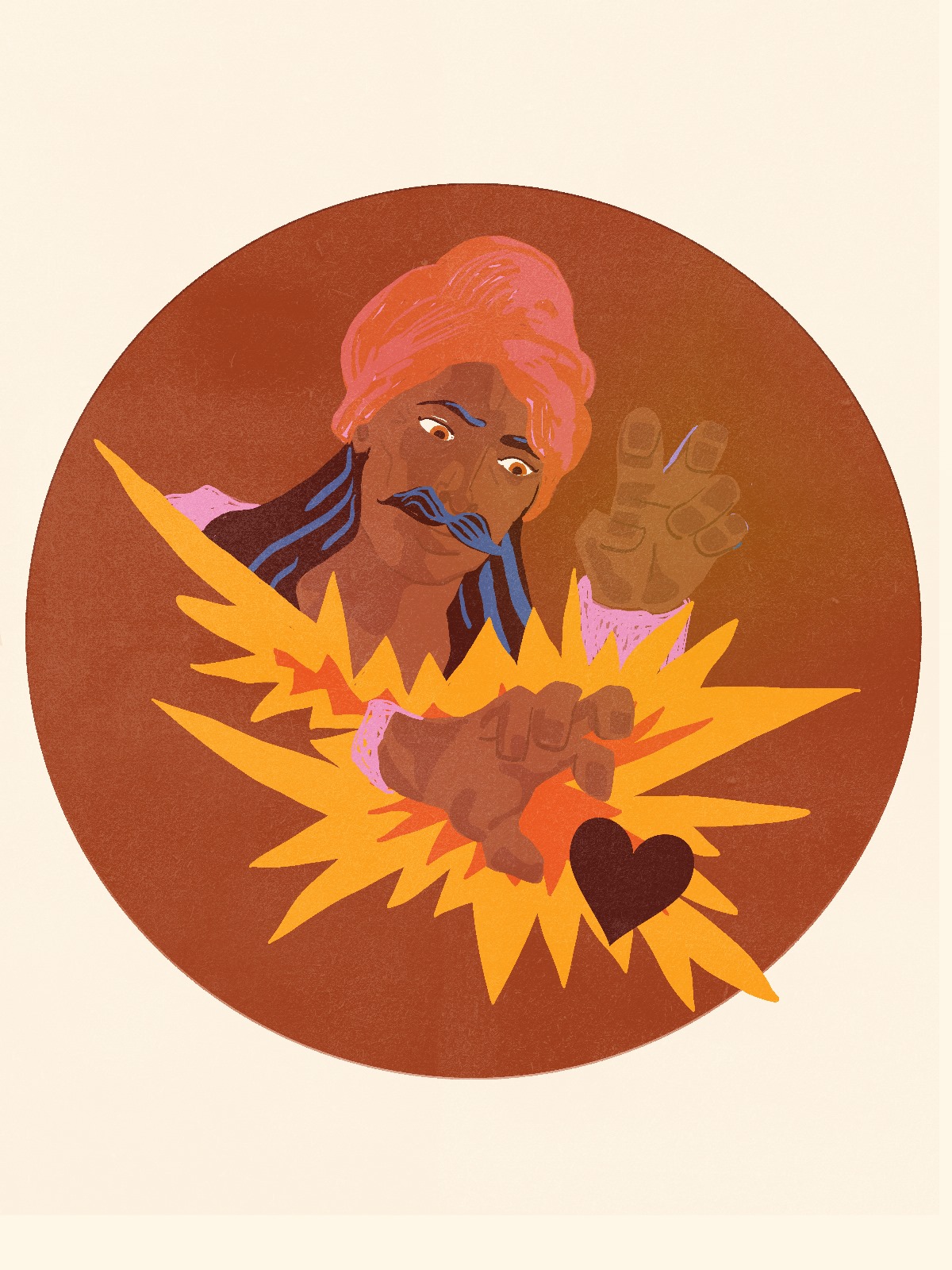
The Apple, the Shark, the Chessboard, Kali, Shiva, the clones and Mirage give bodies to forces that otherwise remain abstract. Doubt falls. Fear learns economics. Division becomes rhythm. Rhythm becomes machine. A sentient spaceship turns the mirror and discovers that the supposedly rational civilization below is being powered by ancient emotional horses.
This is not decoration placed on top of philosophy. The images think differently from the essay. Music, choreography, humor and immersive space can reveal relationships that linear argument cannot hold at once.
Opening
Mirage can become:
A mirror that reveals the pattern.
A map that reconnects what has been separated.
A matchstick that ignites the courage to imagine differently.
The novel, film, visual cosmology, Atlas and Mirage AI are not competing versions of one product. They are different doors into the same perceptual transformation.
Refusal
Mirage must not become an illustrated philosophy lecture or a belief system wearing excellent art direction. The myth needs mystery, ambiguity, danger, humor and a life of its own. It should not tell the audience what to think.
It should make the inherited world briefly impossible not to see.
ENTER IN FOUR WAYS
6. CONTINUE INTO MIRAGE
The Compass is not the whole territory. It is an orientation for the questions asked—a place from which different paths through Mirage become visible.
participation
The Different Paths
the observatory
A living compass
This is not a declaration of final truth.
It is the clearest map of questions Mirage currently has.
The Compass will change as the work changes, as new evidence complicates old ideas, and as other minds enter the investigation. Your agreement is not required.
Your perception is.
Decode the machine.
Recover the human.